🌱 Growing the Future, One Field at a Time 🌾

How Sustainable Farming is Shaping a Better Tomorrow

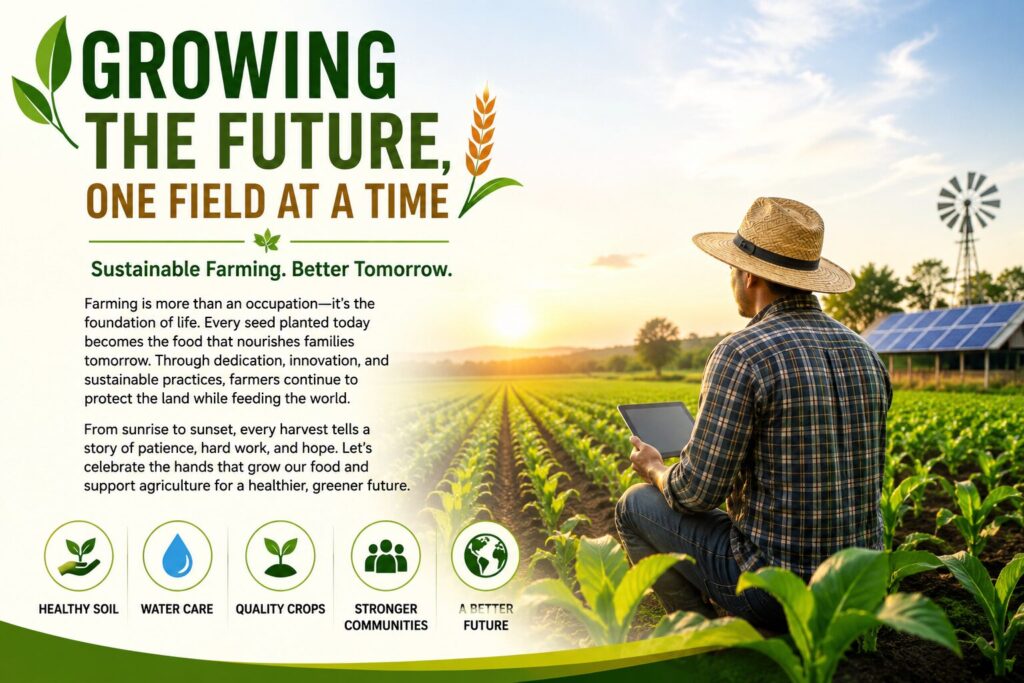
Growing the Future, One Field at a Time – Farmer in a green agricultural field showcasing sustainable farming and modern agriculture.

Agriculture has always been the backbone of civilization. Every meal we enjoy begins with the dedication of hardworking farmers who invest their time, knowledge, and passion into cultivating healthy crops. As the world’s population continues to grow, the need for sustainable farming practices has never been more important.

Growing the future means embracing farming methods that increase productivity while protecting the environment. From conserving water and improving soil health to adopting modern agricultural technology, today’s farmers are creating a stronger and more sustainable future for everyone.

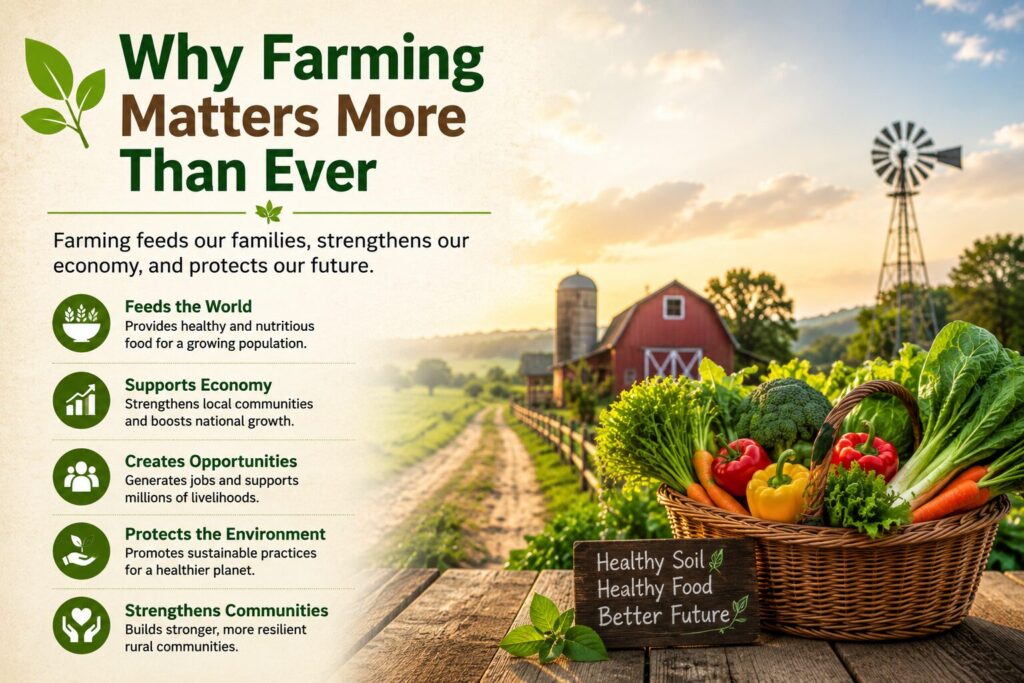
Why Farming Matters More Than Ever

Fresh vegetables in a basket on a modern sustainable farm with a red barn, highlighting the importance of farming for food security, economic growth, and environmental sustainability.

Agriculture does much more than produce food. It plays a vital role in supporting economies, preserving ecosystems, and improving the quality of life for millions of people around the world.

Modern farming contributes by:

  • Producing nutritious food for growing populations
  • Supporting local and global economies
  • Creating employment opportunities
  • Preserving biodiversity
  • Promoting environmental sustainability
  • Strengthening rural communities

Every successful harvest represents months of planning, care, and dedication.

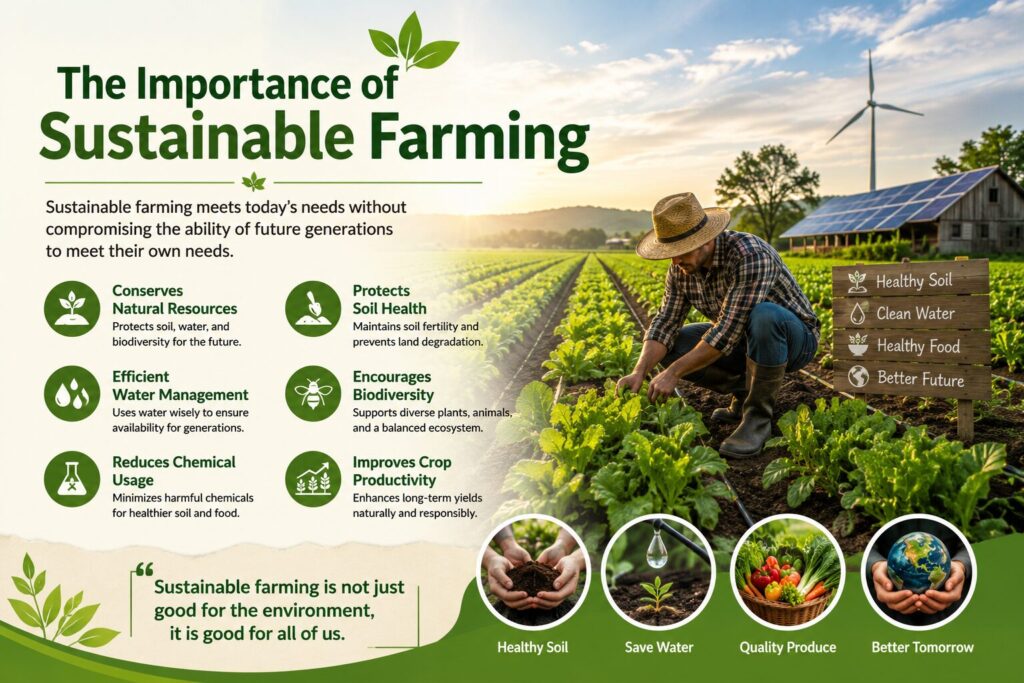
The Importance of Sustainable Farming

Farmer tending crops in a sustainable farm with solar panels and a wind turbine, illustrating eco-friendly farming practices, healthy soil, water conservation, and renewable energy.

Sustainable farming focuses on meeting today’s food needs without compromising the ability of future generations to do the same. It combines traditional farming knowledge with modern innovations to improve efficiency while reducing environmental impact.

Some of the key principles include:

  • Conserving natural resources
  • Protecting soil fertility
  • Efficient water management
  • Reducing chemical usage
  • Encouraging biodiversity
  • Improving crop productivity responsibly


These practices help ensure healthy farms, healthy food, and a healthier planet.

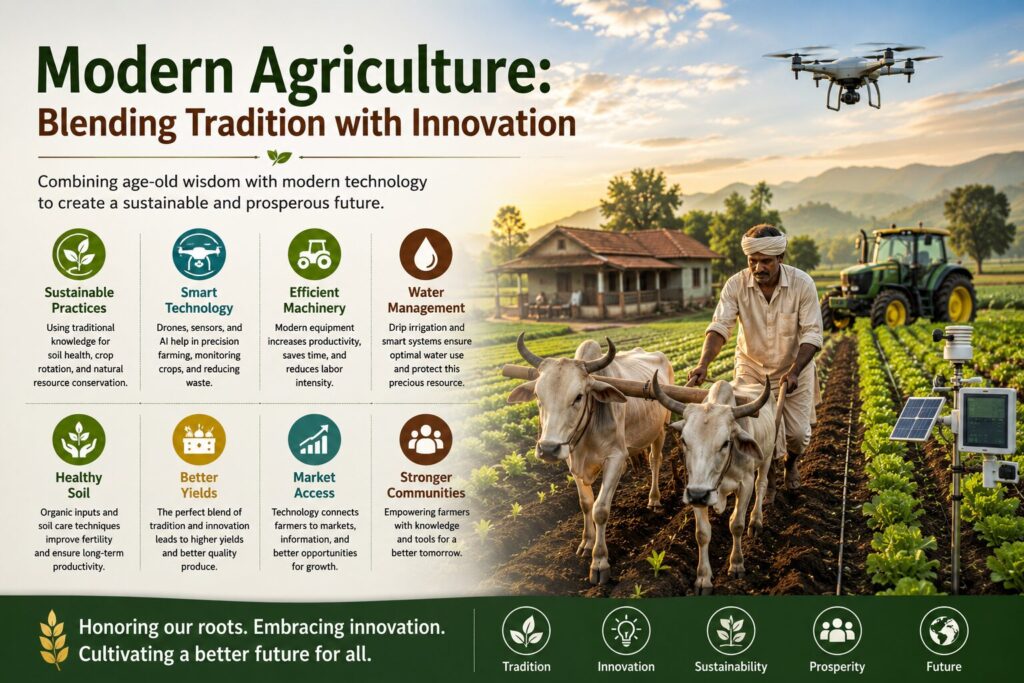
Modern Agriculture: Blending Tradition with Innovation

Farmer using traditional oxen alongside modern farming technologies including drones, tractors, and smart irrigation systems in a sustainable agricultural field.

Technology is transforming agriculture in remarkable ways. Farmers today use advanced tools and data-driven techniques to increase yields while minimizing waste.

Examples include:

Precision Farming

GPS technology, sensors, and drones help farmers monitor crops and apply fertilizers or irrigation only where needed.

Smart Irrigation

Water-efficient irrigation systems reduce water consumption while maintaining healthy crop growth.

Soil Health Monitoring

Regular soil testing allows farmers to maintain nutrient balance and improve long-term productivity.

Improved Crop Management

Modern equipment and scientific farming techniques reduce labor while increasing efficiency and crop quality.

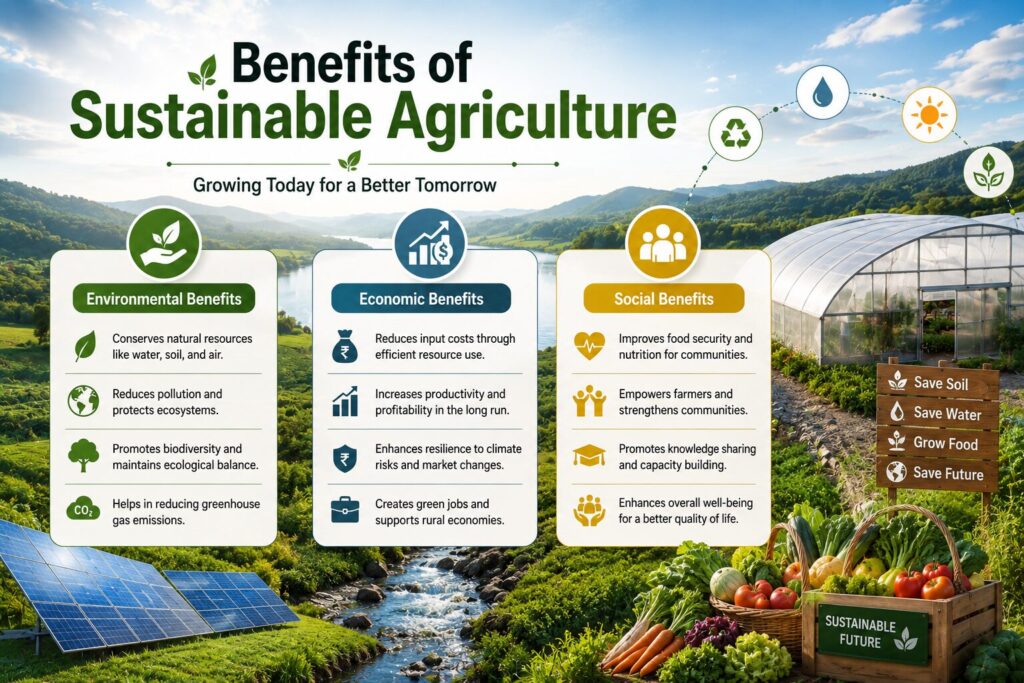
Benefits of Sustainable Agriculture

Infographic showing the environmental, economic, and social benefits of sustainable agriculture with green landscapes, greenhouse farming, renewable energy, and fresh farm produce.

Environmental Benefits

  • Healthier soil
  • Cleaner water
  • Reduced pollution
  • Lower greenhouse gas emissions
  • Increased biodiversity

Economic Benefits

  • Improved crop yields
  • Reduced farming costs
  • Better long-term profitability
  • Increased market opportunities

.

Social Benefits

  • Stronger rural communities
  • Better food security
  • Healthier consumers
  • Sustainable employment opportunities

The Role of Farmers in Building the Future

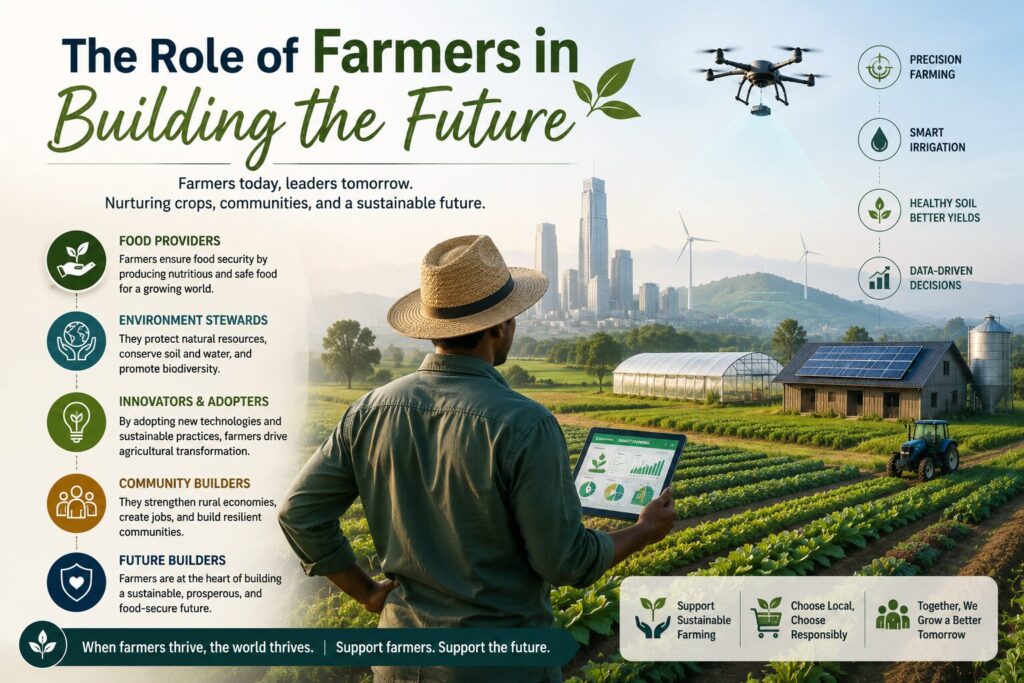
Infographic showing the role of farmers in building the future through sustainable agriculture, smart farming technology, renewable energy, greenhouse cultivation, and precision farming.

Farmers are more than food producers—they are environmental stewards and innovators. Every season requires careful planning, resilience, and commitment.

By adopting sustainable practices, farmers help:

  • Protect natural ecosystems
  • Improve food quality
  • Preserve farmland for future generations
  • Reduce environmental impact
  • Strengthen local economies

Their dedication ensures that agriculture remains productive for years to come.

Challenges Facing Modern Agriculture

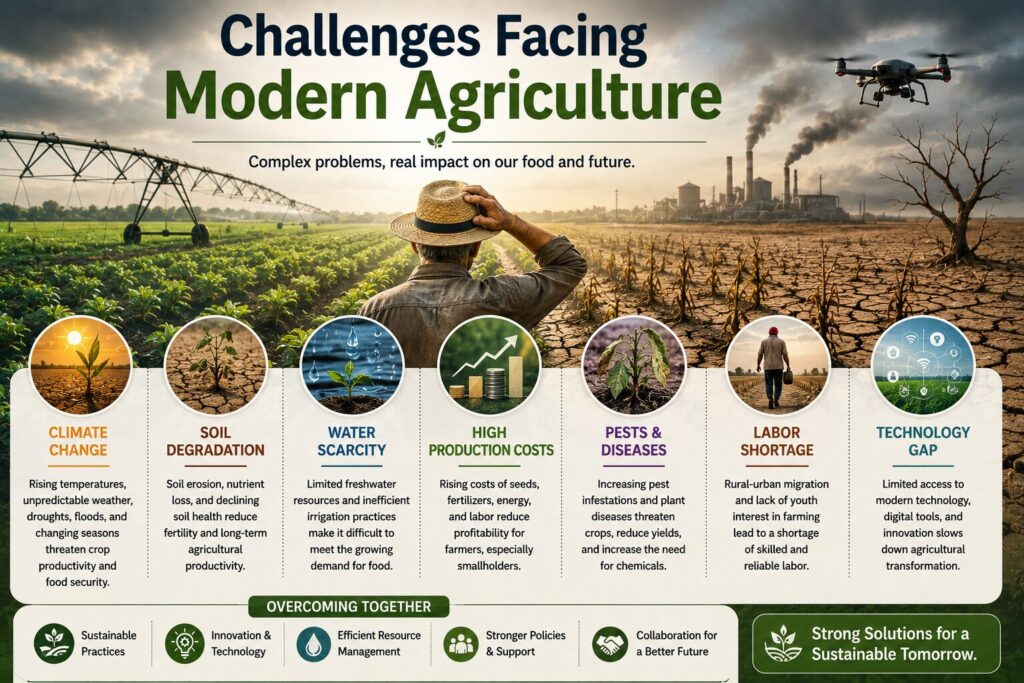
Infographic illustrating the major challenges facing modern agriculture, including climate change, soil degradation, water scarcity, rising production costs, pests, labor shortages, and technology gaps.

Despite significant progress, agriculture continues to face several challenges, including:

  • Climate change
  • Water scarcity
  • Soil degradation
  • Rising production costs
  • Pest and disease management
  • Increasing food demand

Addressing these challenges requires collaboration between farmers, researchers, governments, and consumers.

How Consumers Can Support Sustainable Farming

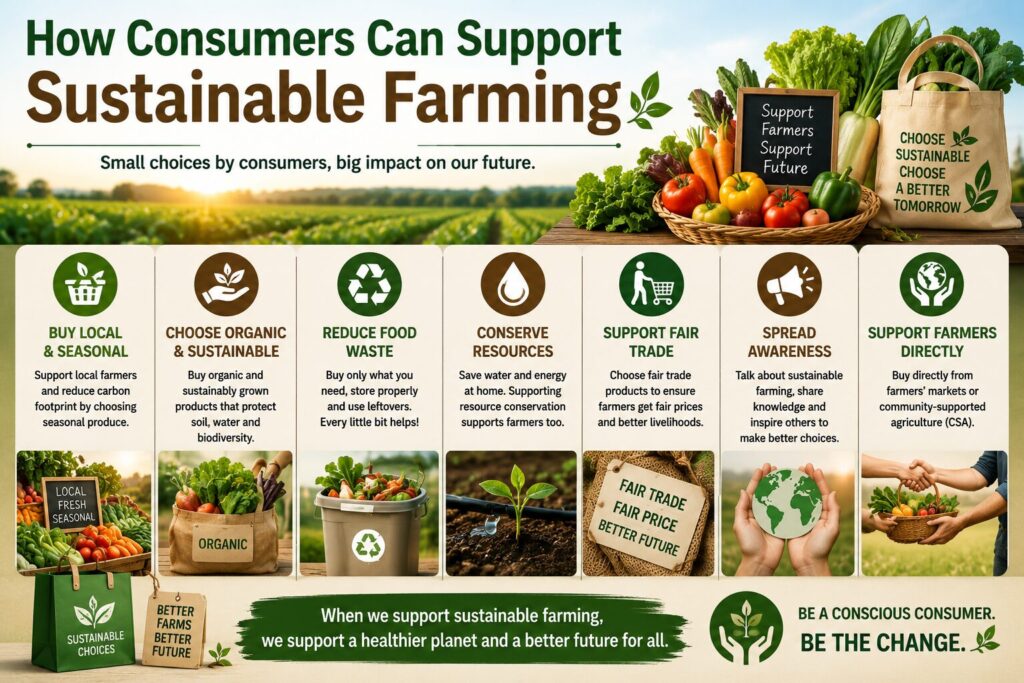
Infographic showing how consumers can support sustainable farming by buying local produce, choosing organic products, reducing food waste, conserving resources, supporting fair trade, and purchasing directly from farmers.

Everyone has a role in supporting agriculture.

Simple actions include:

  • Buying locally grown produce
  • Reducing food waste
  • Supporting responsible farming businesses
  • Choosing seasonal fruits and vegetables
  • Learning about sustainable agriculture
  • Appreciating the work of farmers

Small choices can create meaningful change.

Looking Ahead: The Future of Farming

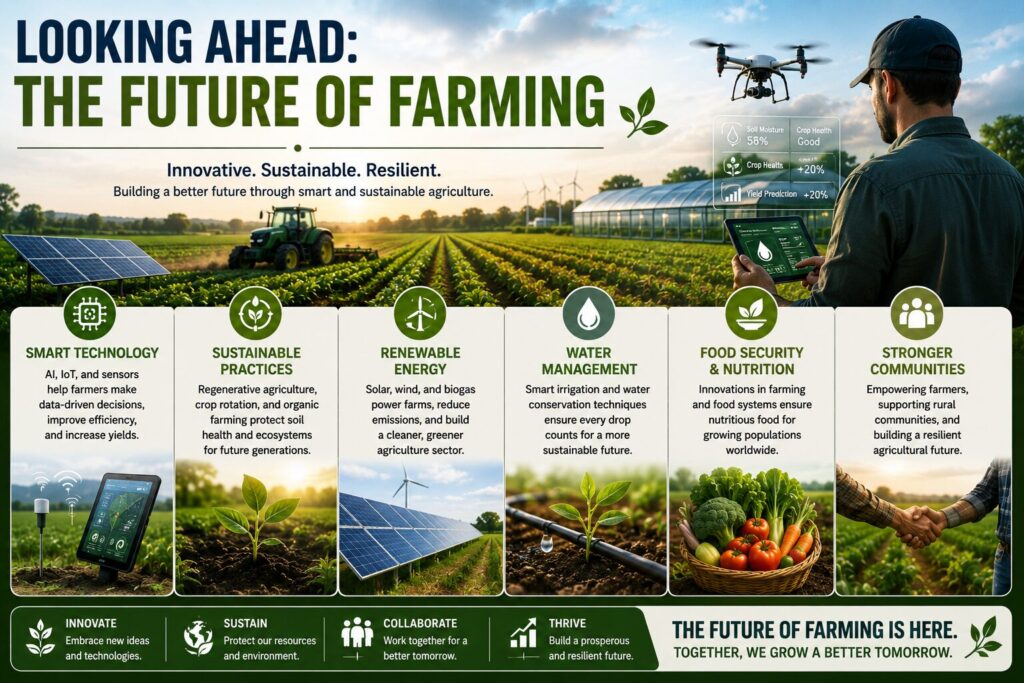
Infographic illustrating the future of farming with smart agriculture technologies, renewable energy, AI-powered farming, precision irrigation, greenhouses, drones, and sustainable food production.

The future of agriculture lies in innovation, sustainability, and responsible resource management. Emerging technologies such as artificial intelligence, smart farming systems, renewable energy, and precision agriculture will continue to improve farming efficiency while protecting the environment.

As global food demand increases, sustainable farming will remain essential for feeding future generations while preserving our planet.

Conclusion

Growing the future begins with every seed planted today. Sustainable farming is not simply about producing more food—it is about creating healthier communities, protecting natural resources, and ensuring long-term agricultural success.

By supporting sustainable agriculture, we invest in cleaner environments, stronger economies, and a better future for generations to come.

Together, we can grow more than crops—we can grow hope, resilience, and a sustainable world.

Frequently Asked Questions (FAQs)

1. What is sustainable farming?

Sustainable farming is an agricultural approach that protects natural resources while producing food efficiently for current and future generations.

2. Why is sustainable agriculture important?

It improves food security, conserves water, protects soil health, reduces environmental impact, and supports long-term agricultural productivity.

3. What are the benefits of modern farming technology?

Modern technology helps farmers increase productivity, reduce waste, conserve resources, improve crop quality, and make informed farming decisions.

4. How can consumers support sustainable farming?

Consumers can buy locally grown produce, reduce food waste, support responsible farms, and choose environmentally friendly food products.

Scroll to Top