Water Conservation for Every Household

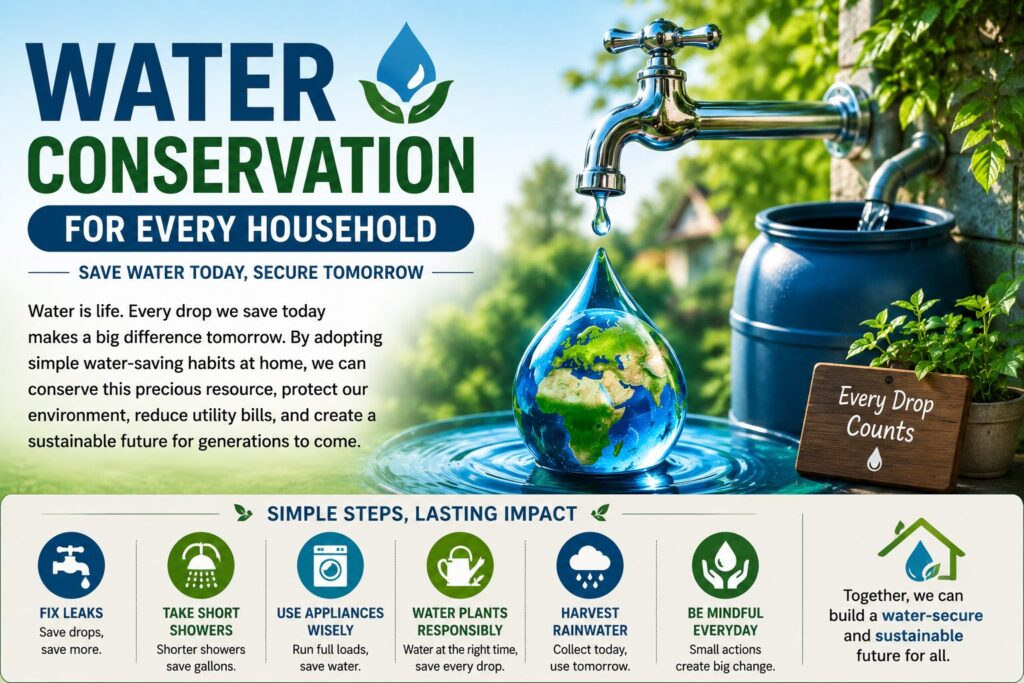
Website header image showing water conservation for every household with a dripping water tap, rainwater harvesting barrel, globe-shaped water droplet, and eco-friendly water-saving message.
Save water today, secure tomorrow. Simple household water conservation practices can protect natural resources, lower water bills, and create a more sustainable future for everyone.

Water is one of the Earth’s most valuable natural resources, yet millions of people face water shortages every year. As populations grow and climate change affects rainfall patterns, conserving water has become more important than ever. Fortunately, every household can make a significant difference by adopting simple water-saving habits.

Water conservation not only helps protect the environment but also lowers utility bills, reduces energy consumption, and ensures that clean water remains available for future generations.

In this guide, we’ll explore why water conservation matters, practical ways to save water at home, and how small daily actions can create a lasting positive impact.

Why Water Conservation Matters

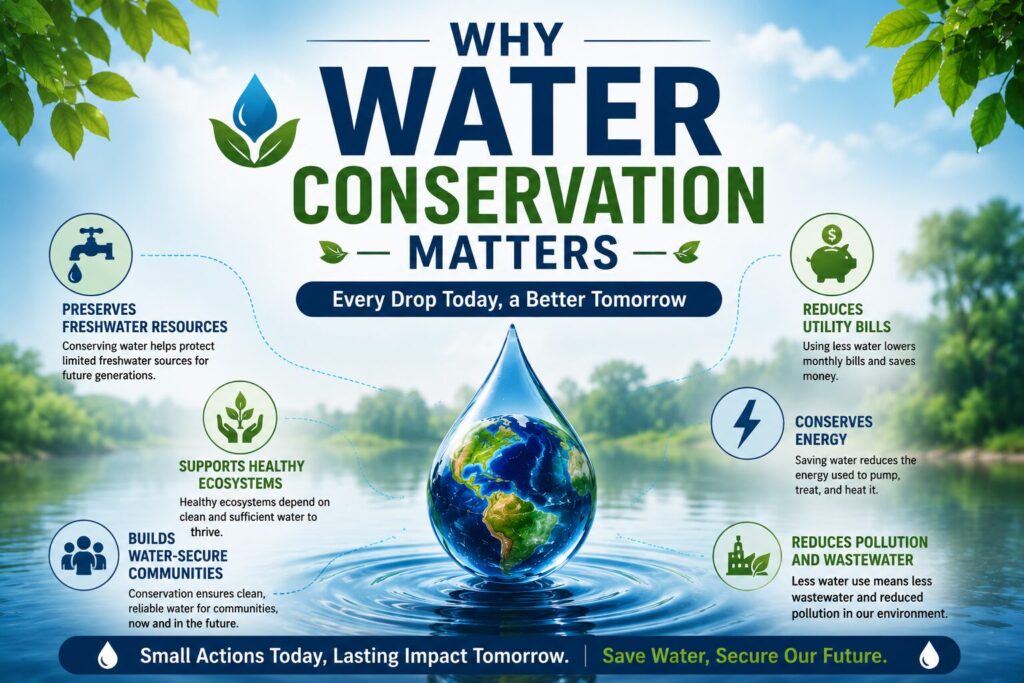
Infographic explaining why water conservation matters, featuring a globe inside a water droplet, freshwater protection, healthy ecosystems, reduced utility bills, energy conservation, and pollution reduction. Image Caption An infographic highlighting why water conservation is essential for protecting freshwater resources, supporting healthy ecosystems, reducing utility bills, conserving energy, and ensuring a sustainable future for everyone. Image Description This infographic illustrates the importance of water conservation through a visually engaging design featuring a globe enclosed within a water droplet, symbolizing Earth's precious freshwater resources. It highlights the key benefits of conserving water, including protecting freshwater supplies, supporting healthy ecosystems, reducing household utility bills, conserving energy, minimizing pollution and wastewater, and building water-secure communities. Set against a serene natural background with a lake and lush greenery, the image reinforces the message that every drop saved today contributes to environmental sustainability, climate resilience, and a better future for generations to come. Focus Keyword Why Water Conservation Matters SEO Keywords Why Water Conservation Matters Water Conservation Save Water Freshwater Conservation Sustainable Water Management Water Security Environmental Sustainability Water Saving Tips Healthy Ecosystems Reduce Water Waste Energy Conservation Pollution Reduction Eco-Friendly Living Sustainable Future Household Water Conservation These details are optimized for WordPress, Yoast SEO, and Rank Math, improving accessibility, Google Image Search visibility, and overall on-page SEO performance.

Freshwater resources are limited, and increasing demand continues to place pressure on lakes, rivers, and groundwater supplies. Conserving water helps maintain healthy ecosystems while ensuring reliable access to clean water for communities worldwide.

Benefits of Water Conservation

  • Protects freshwater resources
  • Reduces household water bills
  • Conserves energy used for water treatment
  • Supports healthy rivers, lakes, and wetlands
  • Reduces pollution and wastewater
  • Helps communities during droughts
  • Preserves water for future generations

Every drop saved today contributes to a more sustainable tomorrow.

Common Causes of Water Waste at Home

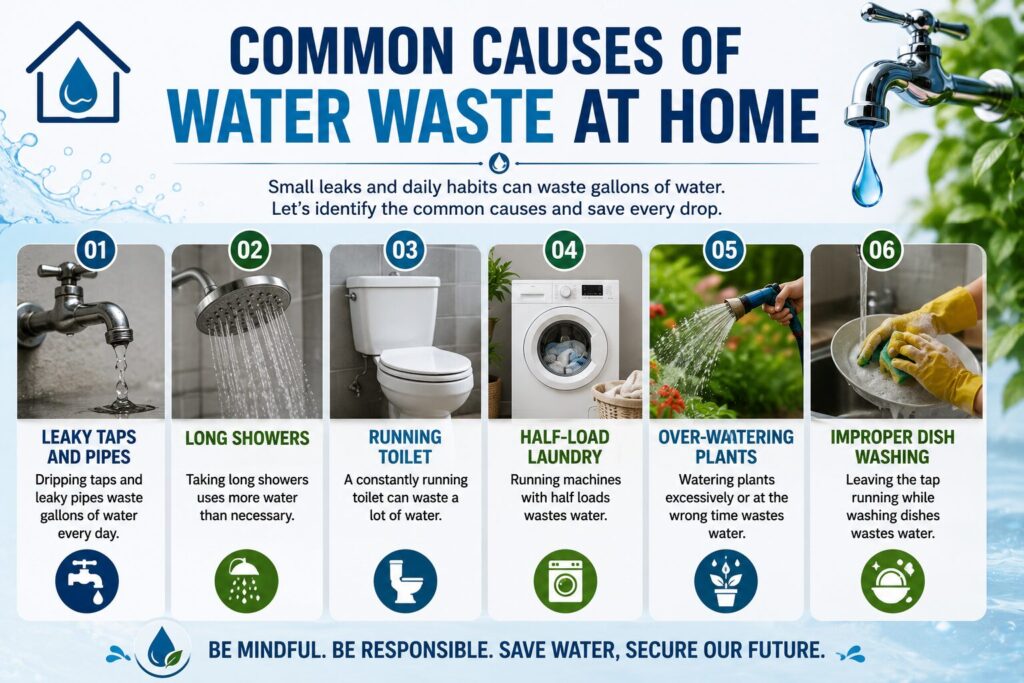
Infographic showing common causes of water waste at home, including leaky taps, long showers, running toilets, half-load laundry, overwatering plants, and improper dishwashing.

Many households waste hundreds of liters of water each month without realizing it. Identifying these sources is the first step toward better conservation.

Common causes include:

  • Leaking faucets and pipes
  • Long showers
  • Running taps while brushing teeth
  • Overwatering gardens
  • Washing cars with hoses
  • Half-full washing machine loads
  • Inefficient toilets and showerheads
  • Ignoring plumbing leaks

Fixing even small leaks can save thousands of liters of water annually.

Easy Water Conservation Tips for Every Household

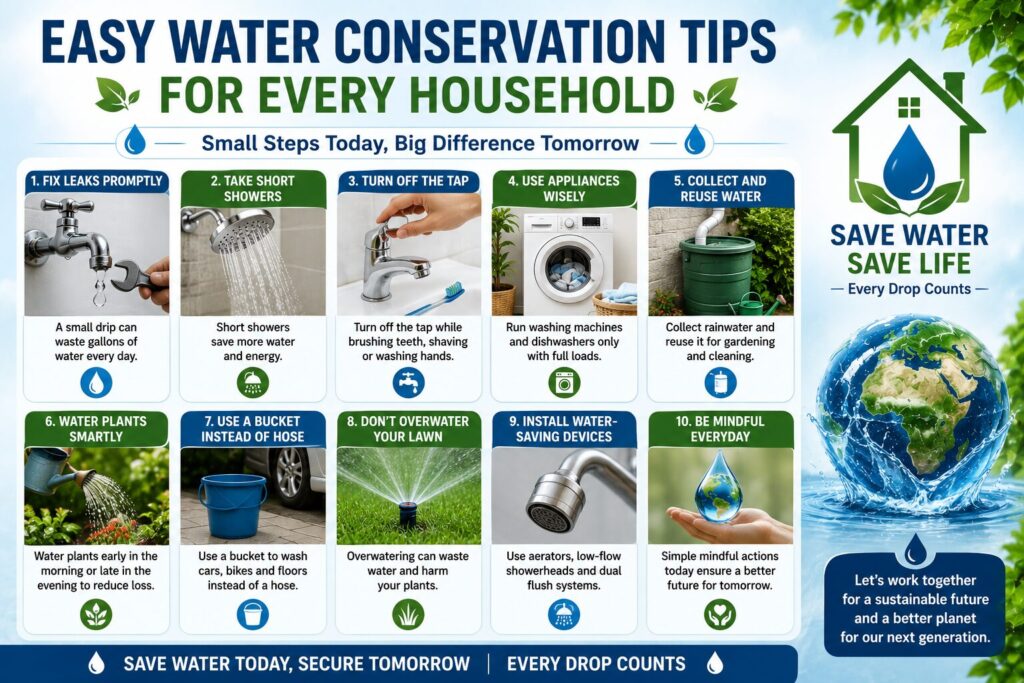
Infographic showing easy water conservation tips for every household, including fixing leaks, taking shorter showers, turning off taps, collecting rainwater, using water-efficient appliances, and watering plants wisely.

1. Fix Leaks Immediately

A dripping faucet or leaking toilet may seem minor but can waste hundreds of liters of water over time.

Benefits:

  • Saves water
  • Lowers water bills
  • Prevents plumbing damage

2. Turn Off the Tap While Brushing

Leaving the tap running while brushing or shaving wastes a surprising amount of water.

Instead:

  • Turn the tap off while brushing.
  • Only use water for rinsing.

3. Take Shorter Showers

Reducing shower time by just a few minutes can save significant amounts of water each week.

Tips:

  • Use a timer.
  • Install water-efficient showerheads.
  • Turn off the shower while applying soap.

4. Upgrade to Water-Efficient Fixtures

Modern plumbing fixtures use less water without sacrificing performance.

Consider installing:

  • Low-flow showerheads
  • Dual-flush toilets
  • Water-efficient faucets
  • Smart irrigation systems

5. Water Plants Wisely

Gardens often consume a large portion of household water.

Best practices include:

  • Water early morning or evening.
  • Use drip irrigation.
  • Collect rainwater.
  • Choose drought-resistant plants.
  • Mulch around plants to reduce evaporation.

6. Run Full Loads Only

Whether using a washing machine or dishwasher, always wait until it’s full.

Benefits:

  • Saves water
  • Reduces electricity use
  • Extends appliance life

7. Wash Vehicles Efficiently

Instead of using a running hose:.

  • Use a bucket and sponge.
  • Wash cars on grass whenever possible.
  • Consider waterless car cleaning products.

8. Harvest Rainwater

Rainwater collection is one of the easiest and most sustainable methods of conserving water.

Collected rainwater can be used for:

  • Watering gardens
  • Cleaning outdoor areas
  • Washing vehicles
  • Irrigation

9. Reuse Water Whenever Possible

Greywater from certain household activities can often be reused safely.

Examples include:

  • Vegetable washing water for plants
  • Water left after rinsing fruits
  • Air-conditioner condensate for gardening

10. Teach the Whole Family

Water conservation works best when everyone participates.

Encourage family members to:

  • Report leaks
  • Turn off unused taps
  • Use water responsibly
  • Practice daily conservation habits

Environmental Benefits of Water Conservation

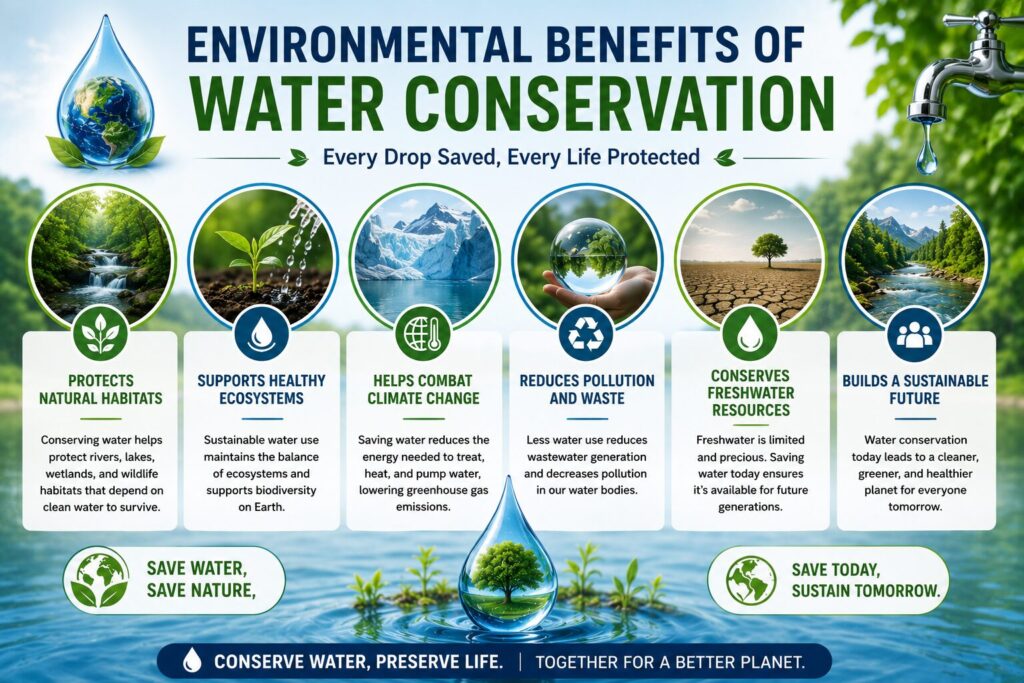
Infographic illustrating the environmental benefits of water conservation, including protecting natural habitats, supporting healthy ecosystems, reducing pollution, conserving freshwater resources, combating climate change, and promoting sustainability.

Saving water protects much more than household budgets.

Environmental benefits include:

  • Reduced groundwater depletion
  • Healthier rivers and lakes
  • Better wildlife habitats
  • Lower carbon emissions
  • Improved ecosystem balance
  • Reduced energy consumption
  • Greater climate resilience

Financial Benefits of Conserving Water

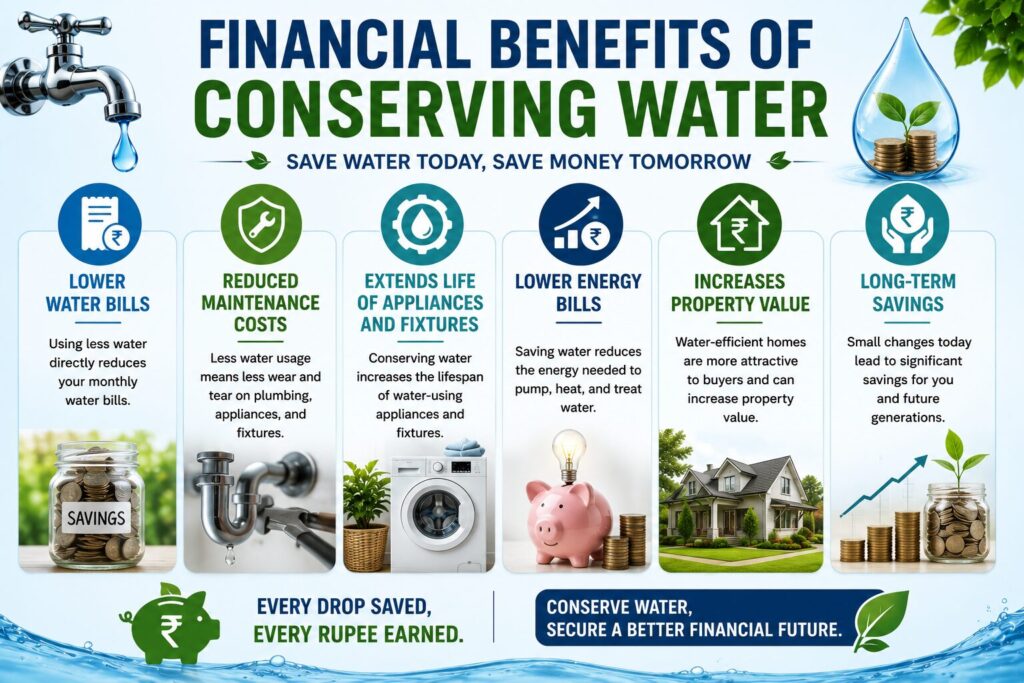
Infographic showing the financial benefits of conserving water, including lower water bills, reduced maintenance costs, lower energy expenses, longer appliance lifespan, increased property value, and long-term savings.

Using less water also means spending less money.

Households can benefit from:

  • Lower monthly water bills
  • Reduced electricity costs
  • Fewer plumbing repairs
  • Longer appliance lifespan
  • Increased property value with efficient fixtures

Water conservation is both environmentally responsible and financially rewarding.

Smart Water-Saving Technologies

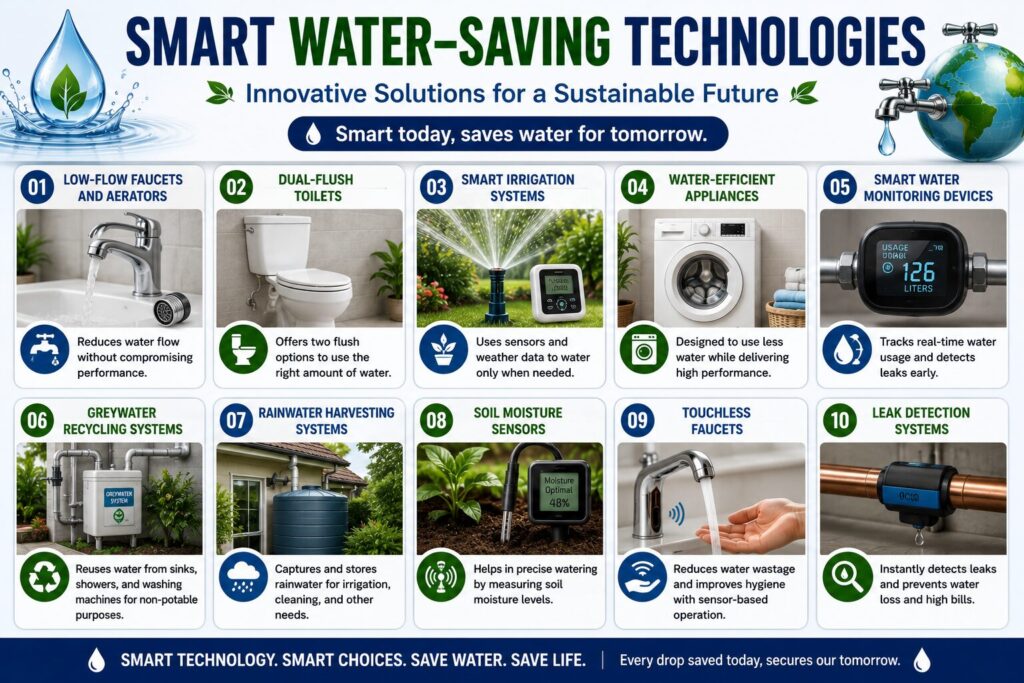
Infographic showcasing smart water-saving technologies, including low-flow faucets, dual-flush toilets, smart irrigation systems, water-efficient appliances, leak detection systems, rainwater harvesting, greywater recycling, and smart water monitoring devices.

Technology makes conservation easier than ever.

Popular solutions include:

  • Smart irrigation controllers
  • Leak detection sensors
  • Water monitoring apps
  • Automatic shut-off valves
  • Water-efficient appliances
  • Rainwater harvesting systems

These innovations help homeowners reduce waste while maintaining convenience.

How Communities Benefit from Water Conservation

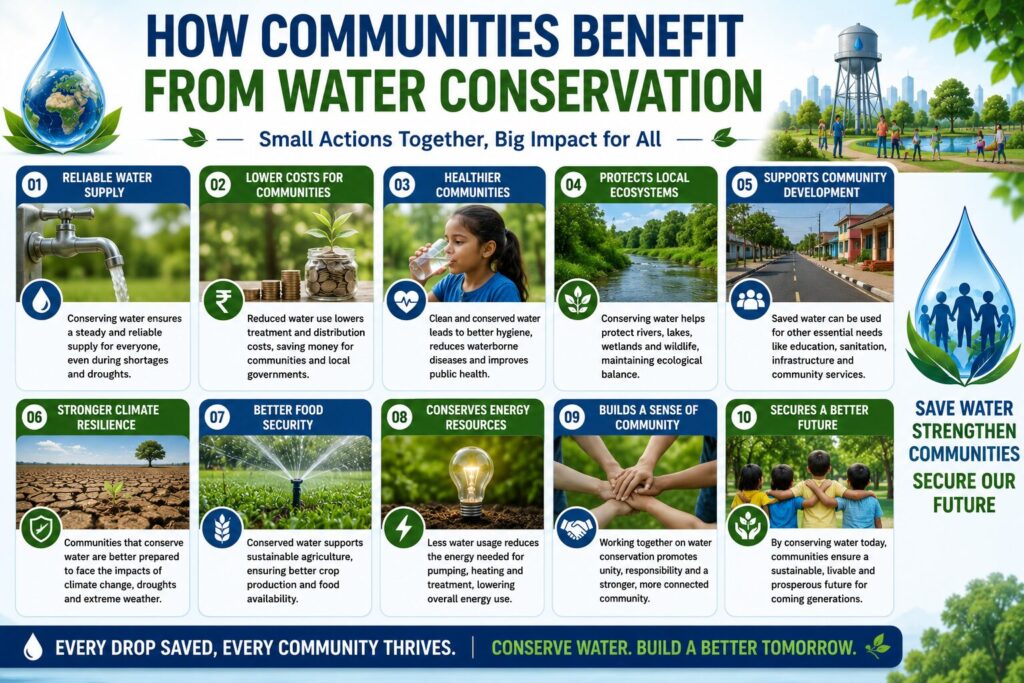
Infographic showing how communities benefit from water conservation through reliable water supply, healthier ecosystems, lower costs, climate resilience, improved public health, food security, and sustainable development.

When households conserve water, entire communities benefit.

Community advantages include:

  • Improved water availability
  • Reduced pressure on infrastructure
  • Better drought preparedness
  • Lower treatment costs
  • Sustainable urban development
  • Increased environmental protection

Every household contributes to a healthier, more resilient community.

The Future of Household Water Conservation

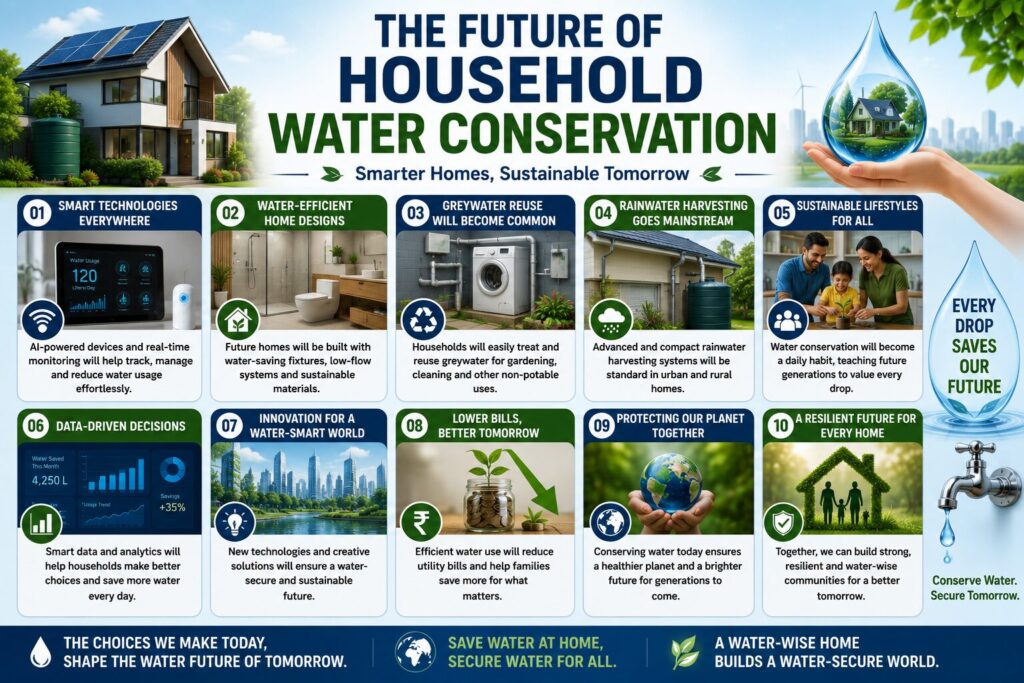
Infographic illustrating the future of household water conservation with smart home technologies, AI water monitoring, rainwater harvesting, greywater recycling, water-efficient home designs, and sustainable living solutions.

As water demand increases worldwide, efficient water use will become even more important. Advances in smart home technology, AI-powered water management, rainwater harvesting, and water recycling systems are helping households use water more responsibly.

By combining innovative technology with simple daily habits, families can play a key role in protecting one of our planet’s most precious resources.

Conclusion

Water conservation begins at home. Small actions such as fixing leaks, taking shorter showers, harvesting rainwater, and using water-efficient appliances can collectively save thousands of liters of water every year.

Every drop counts. By making mindful choices today, households can reduce costs, protect the environment, and ensure clean water remains available for future generations. Together, we can build a more sustainable and water-secure world.

Frequently Asked Questions (FAQs)

1. Why is water conservation important for households?

Water conservation reduces waste, lowers utility bills, protects natural water sources, and ensures clean water for future generations.

2. What are the easiest ways to save water at home?

Fix leaks, turn off taps when not in use, take shorter showers, run full appliance loads, install water-efficient fixtures, and collect rainwater.

3. Does conserving water save money?

Yes. Reduced water usage lowers both water and energy bills while decreasing plumbing maintenance costs.

4. What is rainwater harvesting?

Rainwater harvesting is the collection and storage of rainwater for uses such as gardening, irrigation, cleaning, and other non-drinking purposes.

5. How can children help conserve water?

Lorem ipsum dolor sit amet, consectetur adipiscing elit. Ut elit tellus, luctus nec ullamcorper mattis, pulvinar dapibus leo.

Scroll to Top