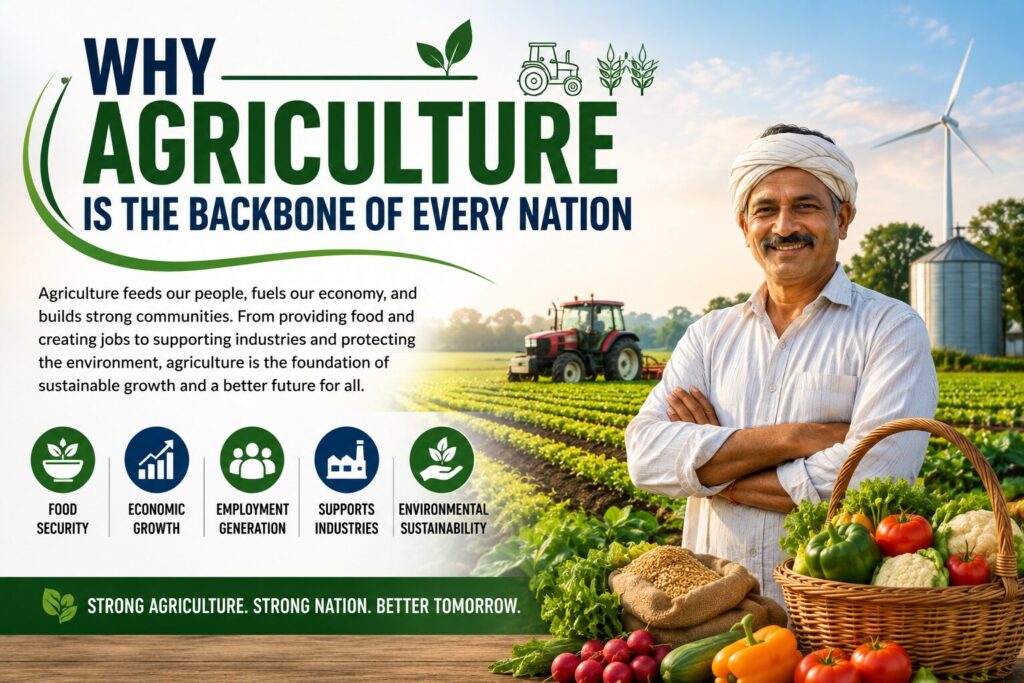
Why Agriculture Is the Backbone of Every Nation
Agriculture has been the foundation of human civilization for thousands of years. Long before industries, technology, and urban development transformed societies, farming provided the food and resources necessary for survival. Even today, agriculture remains one of the most important sectors in every country’s economy, directly influencing food security, employment, trade, and environmental sustainability.
From growing crops and raising livestock to producing raw materials for industries, agriculture supports countless aspects of daily life. It feeds billions of people, creates millions of jobs, strengthens rural communities, and contributes significantly to national economic growth. Without a strong agricultural sector, no nation can achieve long-term prosperity or sustainable development.
In this article, we’ll explore why agriculture is considered the backbone of every nation and how it continues to shape our future.
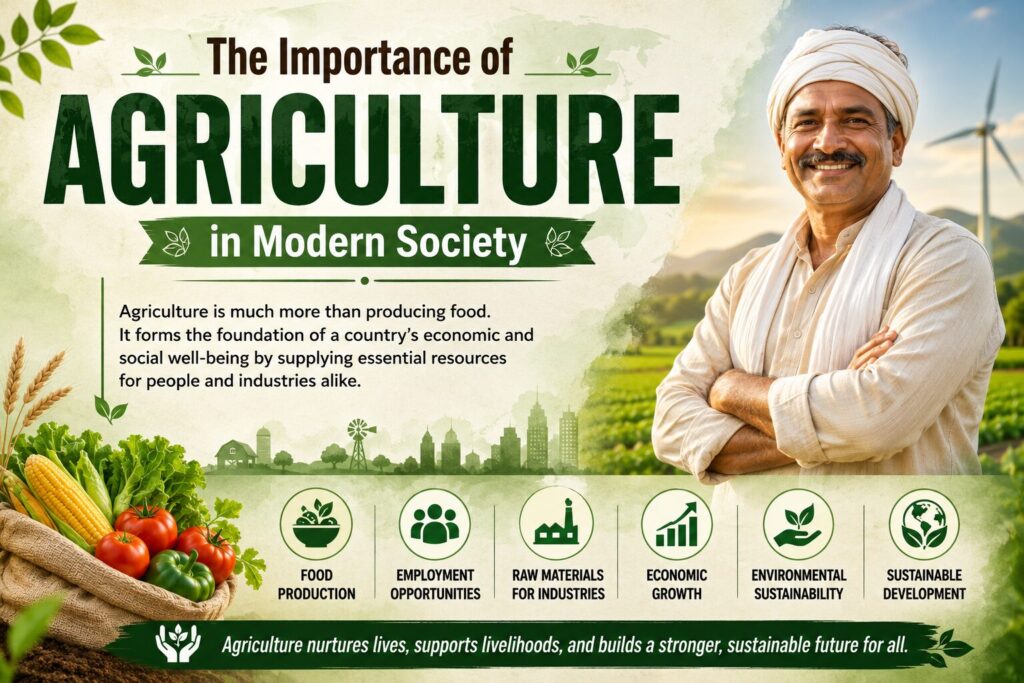
The Importance of Agriculture in Modern Society
Agriculture is much more than producing food. It forms the foundation of a country’s economic and social well-being by supplying essential resources for people and industries alike.
Modern agriculture supports:
- Food production for growing populations
- Employment opportunities in rural and urban areas
- Raw materials for manufacturing industries
- Economic growth through exports
- Environmental conservation and biodiversity
- Sustainable development for future generations
As the global population continues to rise, agriculture plays an increasingly critical role in ensuring food availability while protecting natural resources.
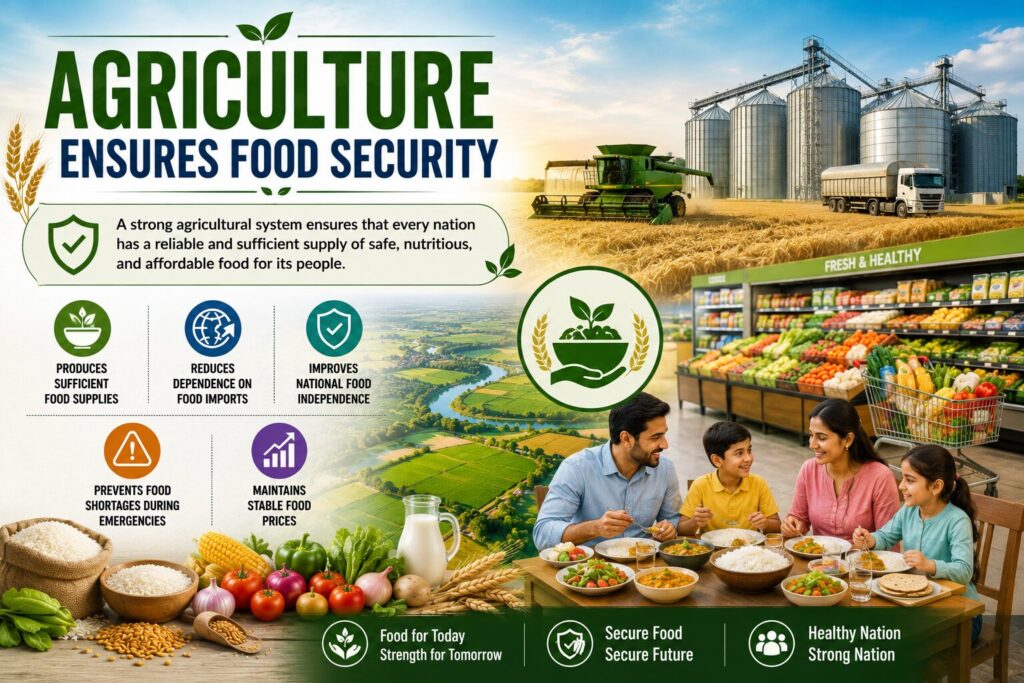
Agriculture Ensures Food Security
Food security is one of the most significant reasons agriculture is essential for every nation. Farmers cultivate crops and raise livestock to provide nutritious food for people around the world.
A strong agricultural system helps:
- Produce sufficient food supplies
- Reduce dependence on food imports
- Improve national food independence
- Prevent food shortages during emergencies
- Maintain stable food prices
Investing in agriculture ensures that future generations have reliable access to safe, healthy, and affordable food.
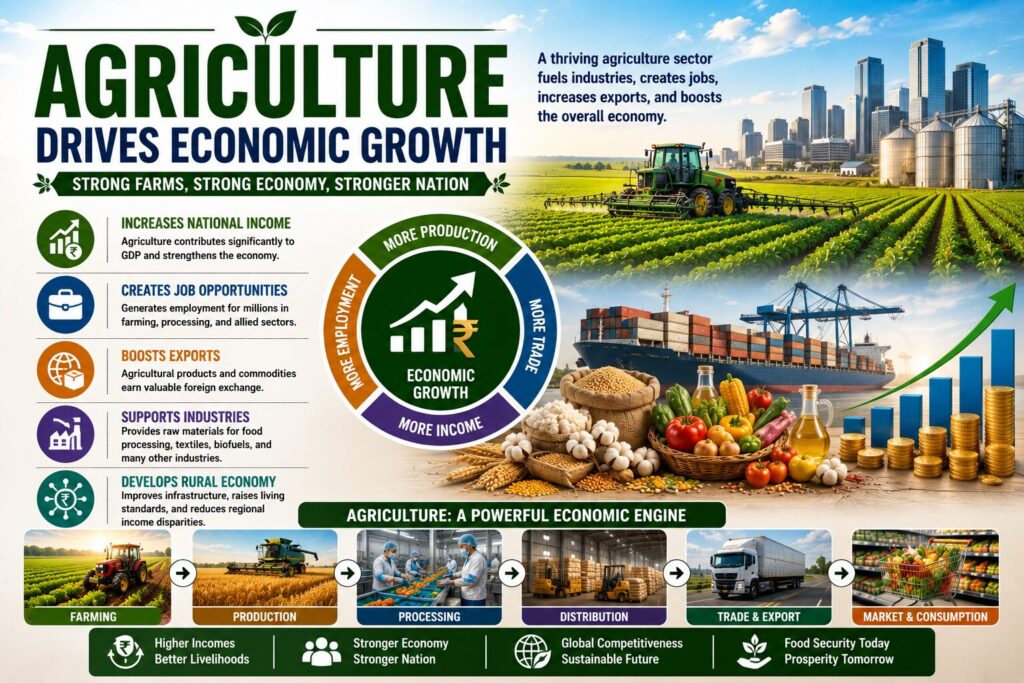
Agriculture Drives Economic Growth
Agriculture contributes significantly to national economies by generating income, creating employment, and supporting related industries.
Economic contributions include:
- Increasing Gross Domestic Product (GDP)
- Supporting exports and foreign exchange earnings
- Encouraging rural business development
- Stimulating agricultural innovation
- Strengthening local and national economies
Many developing countries rely heavily on agriculture as one of their primary economic sectors.
Agriculture Creates Millions of Jobs
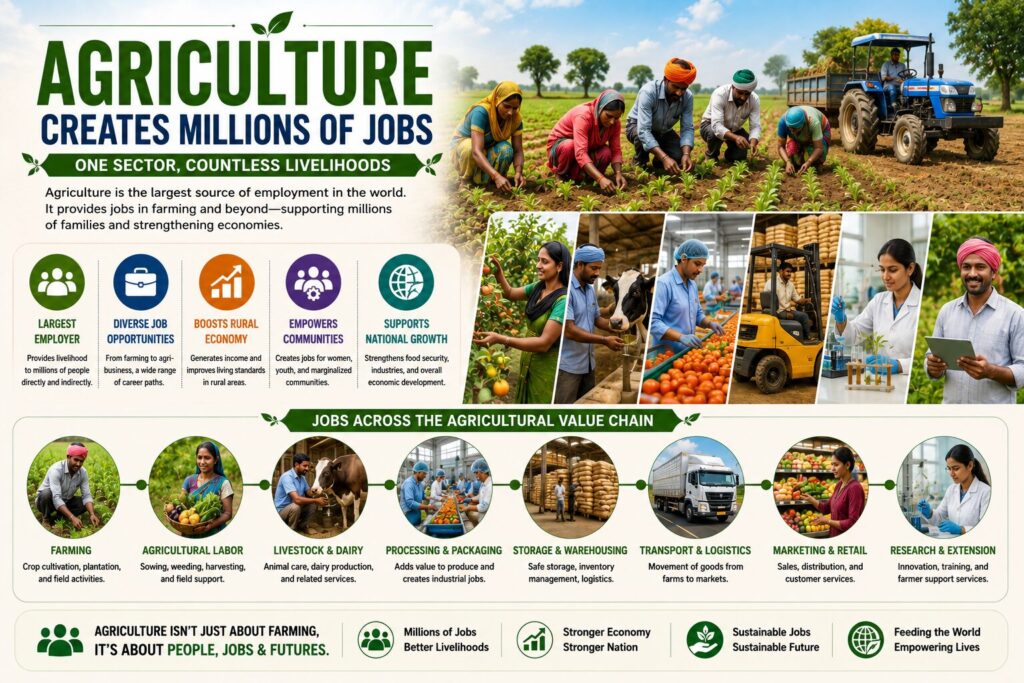
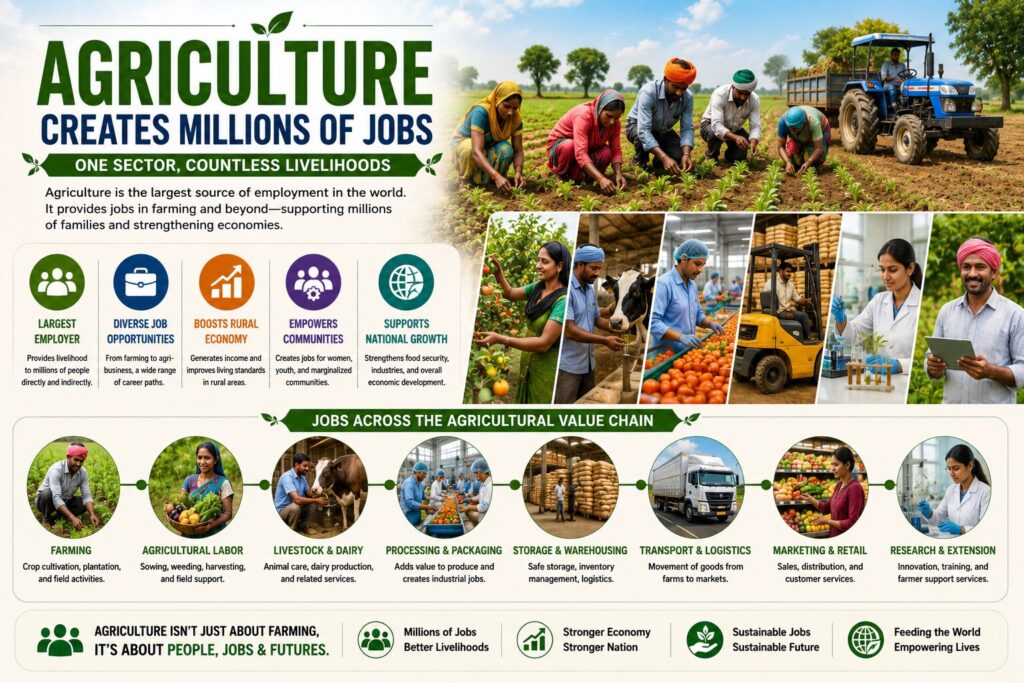
Agriculture is one of the world’s largest employers. Millions of people work directly or indirectly in farming and related industries.
Employment opportunities include:
- Crop farming
- Dairy farming
- Livestock production
- Fisheries
- Horticulture
- Agricultural engineering
- Food processing
- Transportation and logistics
- Agricultural research
- Farm equipment manufacturing
These employment opportunities help reduce poverty while improving rural livelihoods.
Agriculture Supports Industrial Development
Many industries depend on agricultural products as their primary raw materials.
Examples include:
- Food processing industries
- Textile manufacturing
- Paper production
- Dairy processing
- Beverage production
- Biofuel manufacturing
- Pharmaceutical industries
A thriving agricultural sector strengthens industrial growth while creating additional employment opportunities.
Agriculture Protects the Environment
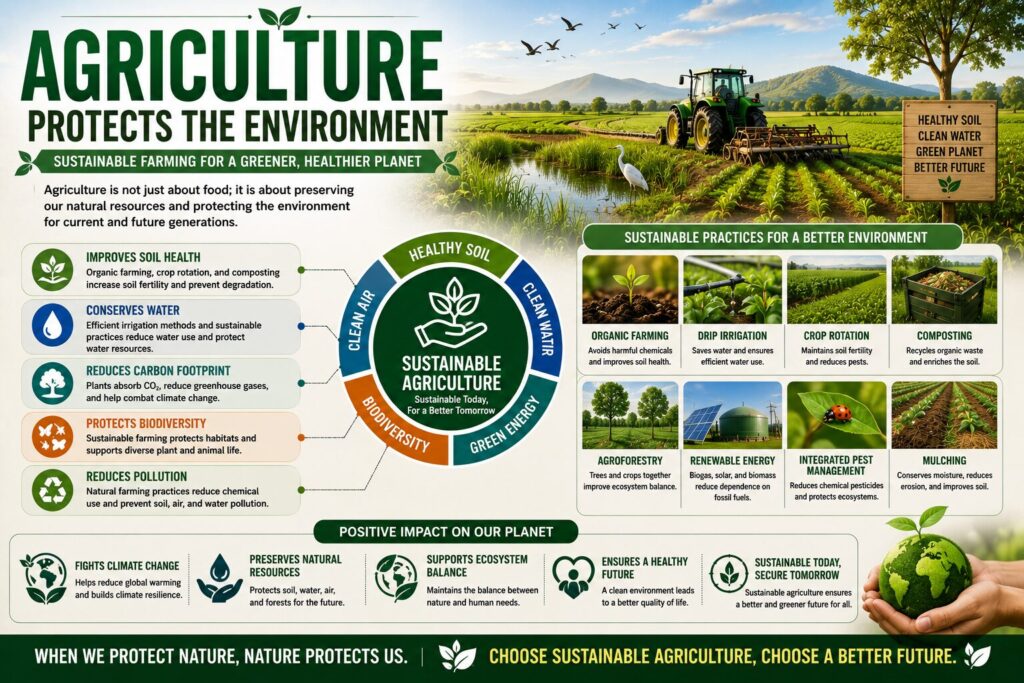
When practiced responsibly, agriculture helps maintain healthy ecosystems and conserve natural resources.
Sustainable farming practices include:
- Crop rotation
- Organic farming
- Water conservation
- Soil conservation
- Agroforestry
- Rainwater harvesting
- Precision agriculture
- Reduced chemical usage
These practices improve biodiversity while protecting soil, water, and wildlife.
Agriculture Strengthens Rural Communities
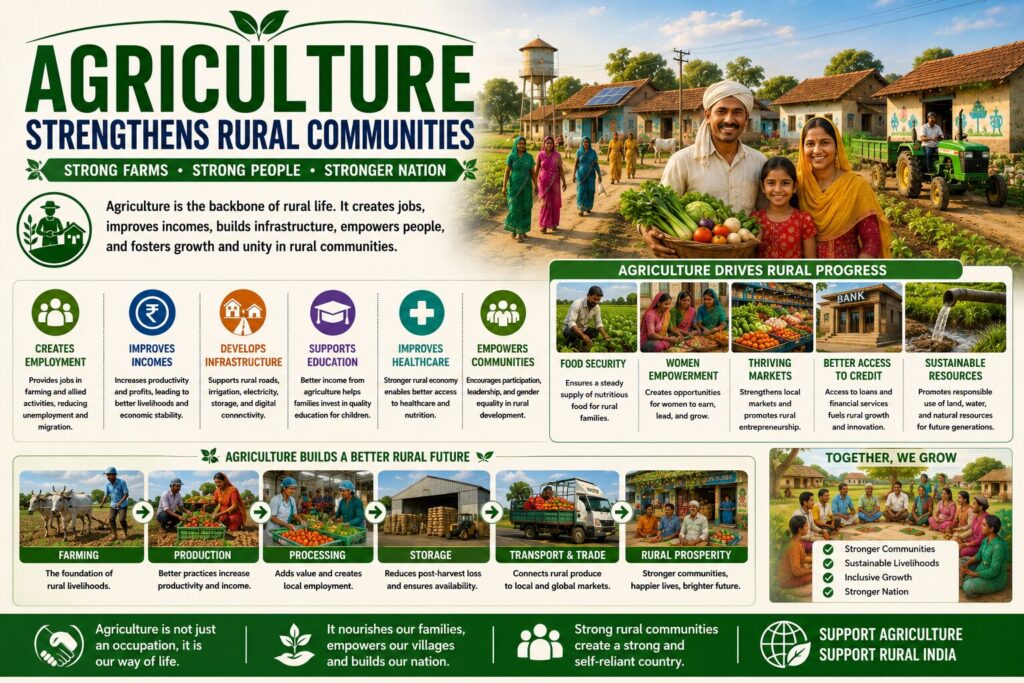
Agriculture serves as the economic foundation of many rural regions worldwide.
It helps communities by:
- Creating local employment
- Improving rural infrastructure
- Supporting local businesses
- Reducing migration to cities
- Preserving cultural traditions
- Encouraging community development
Healthy agricultural systems contribute to stronger and more resilient rural economies.
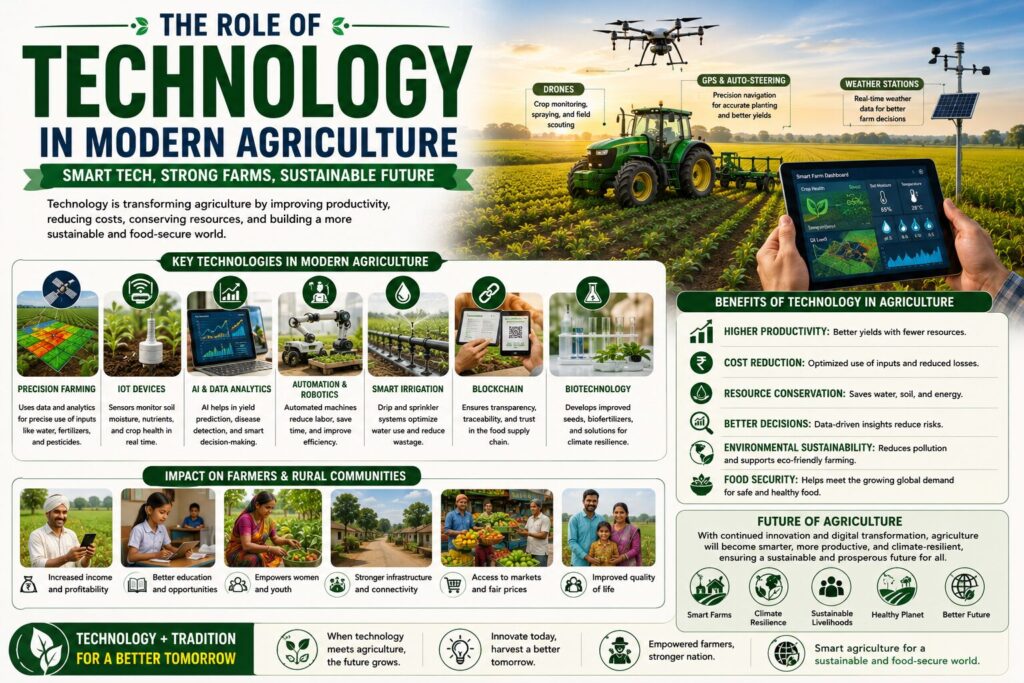
The Role of Technology in Modern Agriculture
Technology is transforming agriculture into a smarter, more productive industry.
Modern farming innovations include:
- Precision farming
- GPS-guided tractors
- Agricultural drones
- AI-powered crop monitoring
- Smart irrigation systems
- IoT-based farm management
- Weather forecasting technologies
- Automated harvesting equipment
These technologies improve productivity while reducing environmental impact.
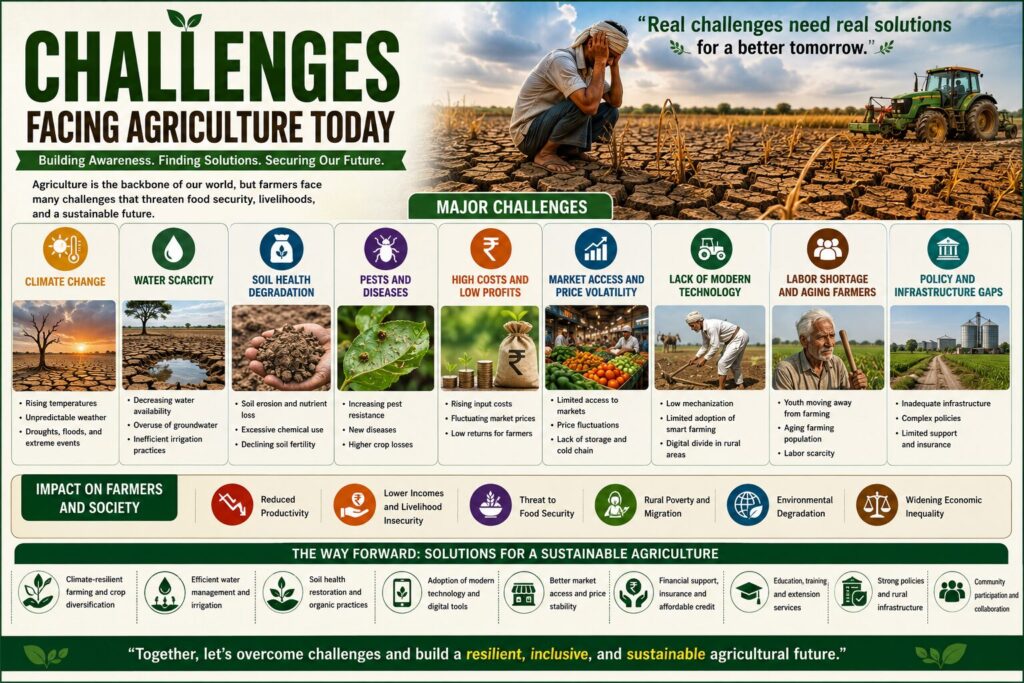
Challenges Facing Agriculture Today
Despite its importance, agriculture faces several global challenges.
Major challenges include:
- Climate change
- Water scarcity
- Soil degradation
- Pest and disease outbreaks
- Rising production costs
- Labor shortages
- Extreme weather events
- Loss of biodiversity
Addressing these issues requires investment, innovation, and sustainable farming practices.
Sustainable Agriculture: Building a Better Future
Sustainable agriculture focuses on meeting today’s food needs without compromising future generations.
Key sustainable practices include:
- Efficient water management
- Renewable energy on farms
- Organic farming methods
- Soil health improvement
- Integrated pest management
- Conservation agriculture
- Carbon-smart farming
- Climate-resilient crop production
These practices help protect natural resources while maintaining agricultural productivity.
How Governments Can Support Agriculture
Governments play a crucial role in strengthening agricultural development.
Important support measures include:
- Investing in agricultural research
- Providing farmer education and training
- Improving irrigation infrastructure
- Supporting modern farming technologies
- Offering financial assistance and crop insurance
- Expanding rural transportation networks
- Promoting sustainable farming policies
Strong government support creates resilient agricultural systems capable of meeting future challenges.
How Consumers Can Support Agriculture
Consumers also contribute to agricultural sustainability through everyday choices.
Simple ways include:
- Buying locally grown produce
- Supporting sustainable farming
- Reducing food waste
- Choosing seasonal fruits and vegetables
- Conserving water
- Promoting environmentally friendly products
- Learning about food production
Responsible consumer behavior encourages healthier agricultural systems.
The Future of Agriculture
Agriculture is rapidly evolving through innovation and sustainability.
Future trends include:
- Artificial Intelligence (AI)
- Precision agriculture
- Vertical farming
- Hydroponics
- Robotics
- Climate-smart farming
- Renewable energy integration
- Smart irrigation systems
- Sustainable food production
These innovations will help feed the world’s growing population while protecting the environment.
Frequently Asked Questions (FAQs)
1. Why is agriculture called the backbone of every nation?
Agriculture is called the backbone of every nation because it provides food, creates employment, supports industries, strengthens economies, and contributes to environmental sustainability.
2. How does agriculture help the economy?
Agriculture generates employment, increases exports, supports industries, contributes to GDP, and promotes rural development.
3. Why is sustainable agriculture important?
Sustainable agriculture protects natural resources, conserves water, improves soil health, reduces pollution, and ensures long-term food security.
4. What are the biggest challenges facing agriculture?
Major challenges include climate change, water scarcity, soil degradation, rising production costs, labor shortages, and extreme weather conditions.
5.How is technology improving agriculture?
Technology improves farming through smart irrigation, AI, drones, GPS-guided equipment, precision agriculture, and automated machinery, increasing productivity and resource efficiency.

Conclusion
Agriculture is far more than a means of producing food—it is the foundation of economic growth, environmental sustainability, and national development. It feeds populations, creates employment, powers industries, and supports communities while preserving essential natural resources.
As global challenges such as climate change, population growth, and resource scarcity continue to grow, investing in sustainable and innovative agricultural practices has never been more important. Governments, farmers, businesses, and consumers all have a role to play in building a resilient agricultural sector.
By supporting agriculture today, we help ensure a healthier, more prosperous, and more sustainable future for generations to come.