
What is Digital Marketing? A Complete Beginner's Guide (2026)
Category: Digital Marketing
Author: Yashvi Digital
Reading Time: 10–12 Minutes
📖 In This Guide
Click any topic below to jump directly to that section of the guide.
- 1. Introduction
- 2. What Is Digital Marketing?
- 3. Why Is Digital Marketing Important?
- 4. How Does Digital Marketing Work?
- 5. Types of Digital Marketing
- 6. Benefits of Digital Marketing
- 7. Challenges of Digital Marketing
- 8. Future of Digital Marketing
- 9. Frequently Asked Questions (FAQs)
- 10. Final Thoughts
1. Introduction
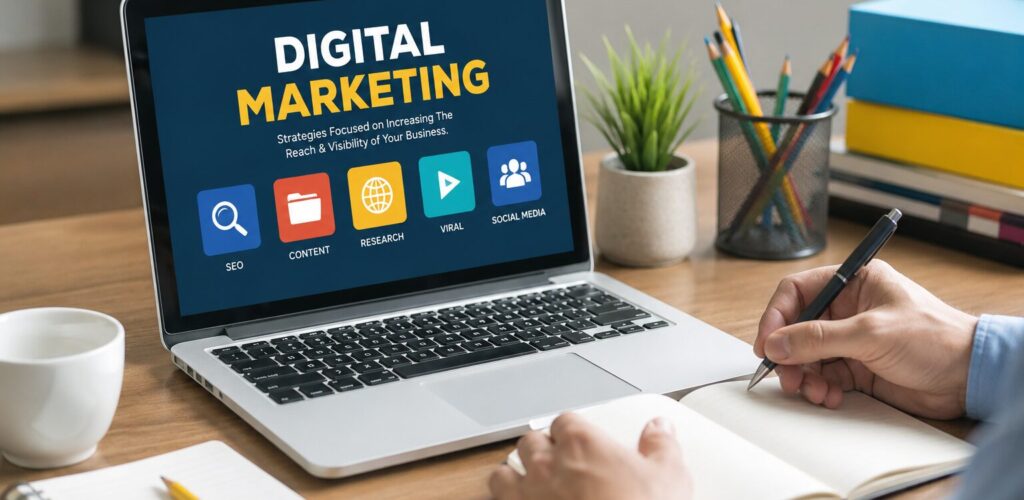
In today’s digital world, almost every business wants to attract more customers online. Whether you own a local shop, a startup, an
e-commerce store, or a multinational company, having a strong online presence is no longer optional—it’s essential.
This is where digital marketing comes into the picture.
Digital marketing is the process of promoting products, services, or brands using digital channels such as search engines, social media platforms, websites, email, and mobile applications. Unlike traditional marketing methods, digital marketing allows businesses to reach their target audience more effectively while measuring performance and return on investment.
From Google Search and YouTube to Instagram, Facebook, LinkedIn, and WhatsApp, digital marketing helps businesses connect with potential customers wherever they spend their time online.
In this complete beginner’s guide, you’ll learn:
- What digital marketing is.
- Why it is important.
- How digital marketing works.
- Different types of digital marketing.
- The benefits of digital marketing.
- How beginners can start learning digital marketing.
- Future trends shaping digital marketing in 2026.
By the end of this guide, you’ll have a clear understanding of digital marketing and why it has become one of the most valuable business strategies in the modern world.
2. What Is Digital Marketing ?
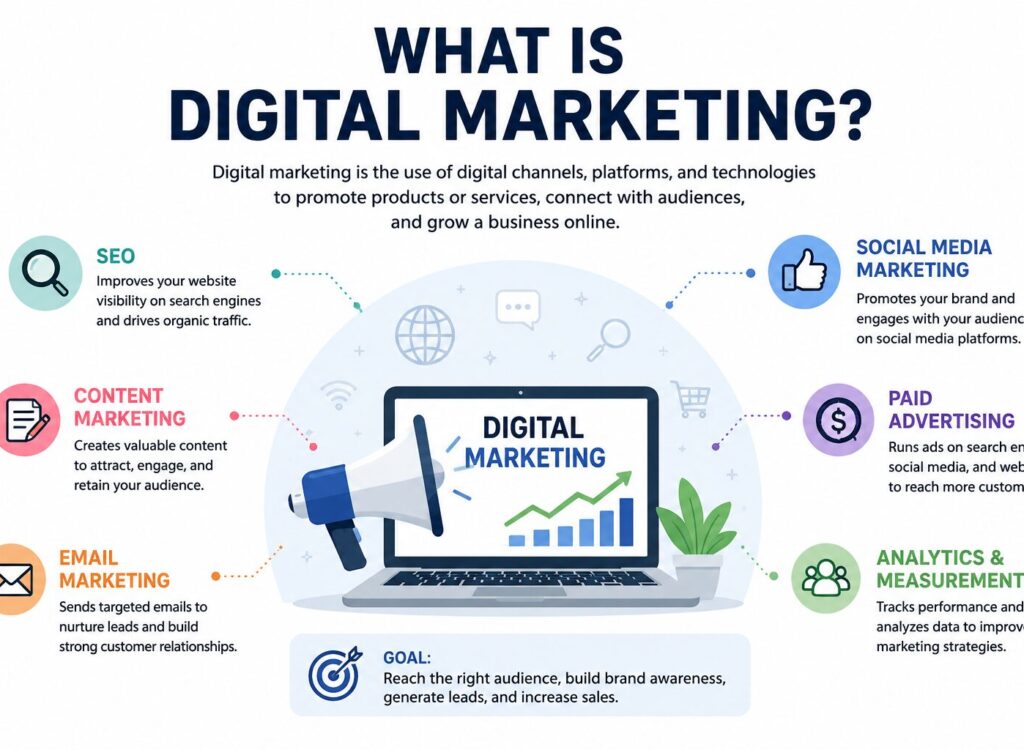
Digital marketing refers to the promotion of products, services, or brands through digital platforms and online technologies to attract, engage, and convert customers.
Simply put, whenever a business uses the internet to market its products or services, it is using digital marketing.
Some common examples include:
- Searching for a business on Google.
- Watching advertisements on YouTube.
- Seeing sponsored posts on Instagram.
- Receiving promotional emails.
- Clicking Facebook advertisements.
- Reading blog articles online.
Digital marketing combines technology, creativity, and data analysis to help businesses achieve their marketing goals.
Unlike traditional marketing, digital marketing allows businesses to:
- Reach a global audience.
- Target specific customers.
- Track campaign performance.
- Optimize marketing strategies.
- Generate measurable results.
For example, a local restaurant can use Google Business Profile, social media marketing, and local SEO to attract nearby customers, while an e-commerce business can use Google Ads and email marketing to generate sales worldwide.
3. Why is Digital Marketing Important?
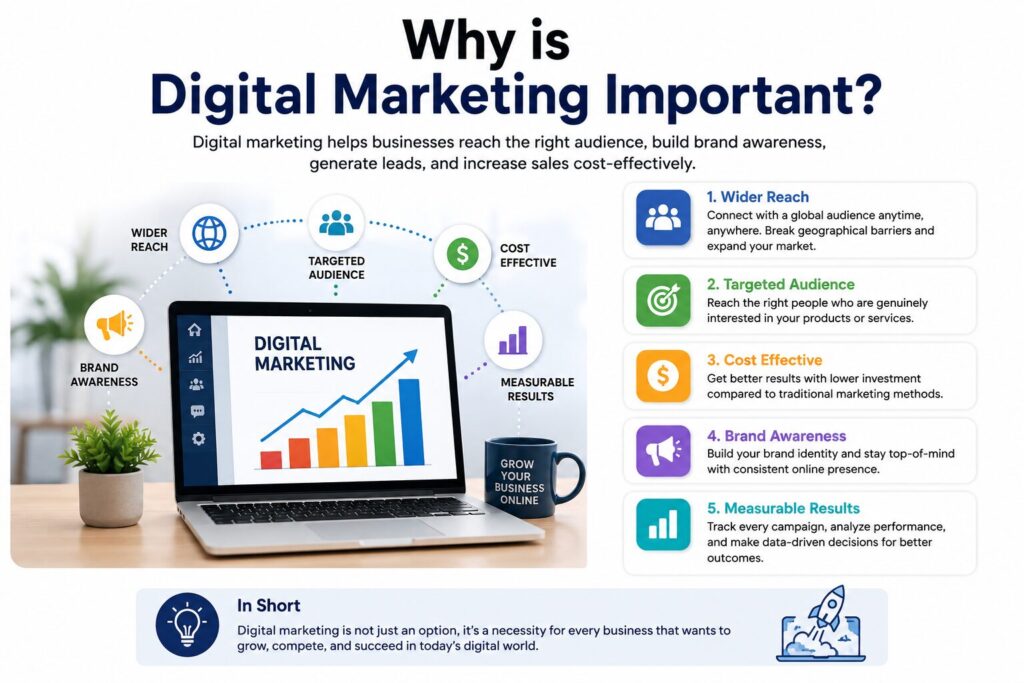
The world has become increasingly digital.
Millions of people use Google, YouTube, Instagram, Facebook, LinkedIn, and other online platforms every day to search for products, services, and information.
If your business isn’t visible online, potential customers may choose your competitors instead.
Here are some reasons why digital marketing is important:
I) . Global Reach
Businesses can connect with customers across cities, countries, and even continents without opening physical offices.
II) . Cost Effective Marketing
Compared to traditional advertising methods like newspapers or television, digital marketing offers affordable options for businesses of all sizes.
III) Better Targeting
Businesses can target customers based on:
- Age
- Gender
- Interests
- Location
- Profession
- Shopping behavior
This increases marketing efficiency.
IV) . Measurable Results
Unlike traditional marketing, digital campaigns provide detailed analytics, including:
- Website traffic
- Clicks
- Conversions
- Leads
- Sales
- Return on investment
V) . Improved Customer Engagements
Businesses can interact directly with customers through social media, email, live chat, and messaging platforms.
VI) . Higher Conversion Rates
By targeting the right audience at the right time, businesses can generate more leads and sales.
4. How Does Digital Marketing Work?
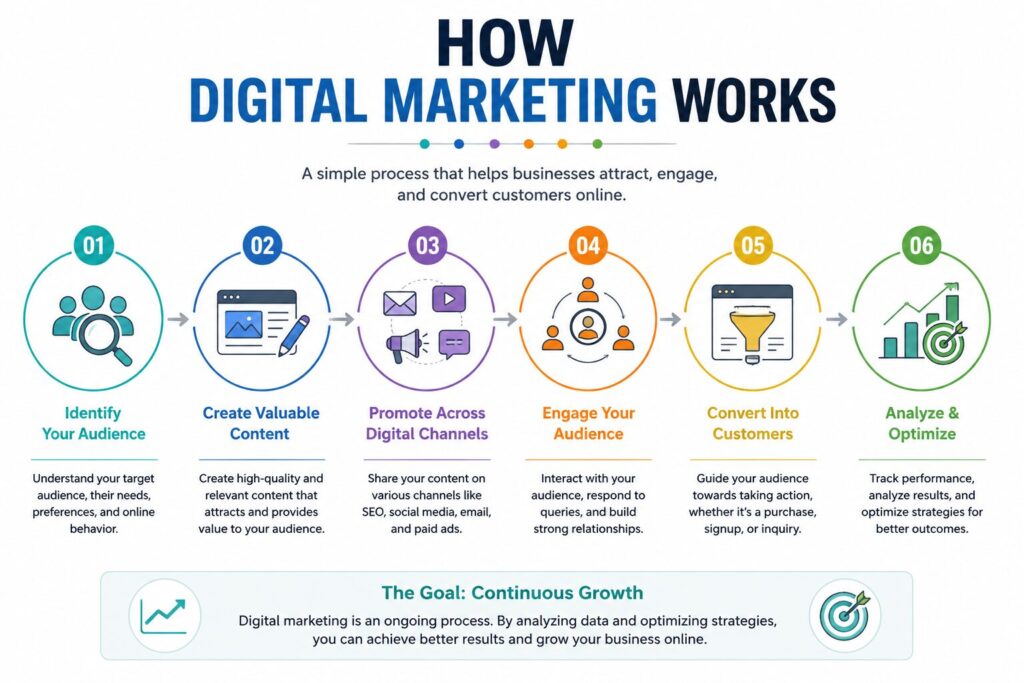
Digital marketing works by attracting potential customers, building trust, and converting them into paying customers.
The basic process looks like this:
Awareness → Interest → Consideration → Conversion → Loyalty
For example:
A customer searches Google for “best digital marketing agency.”
↓
Finds your website.
↓
Reads your blog article.
↓
Visits your services page.
↓
Contacts your business.
↓
Becomes a customer.
↓
Recommends your business to others.
This customer journey is supported by multiple digital marketing channels working together to create a seamless experience.
5. Types of Digital Marketing
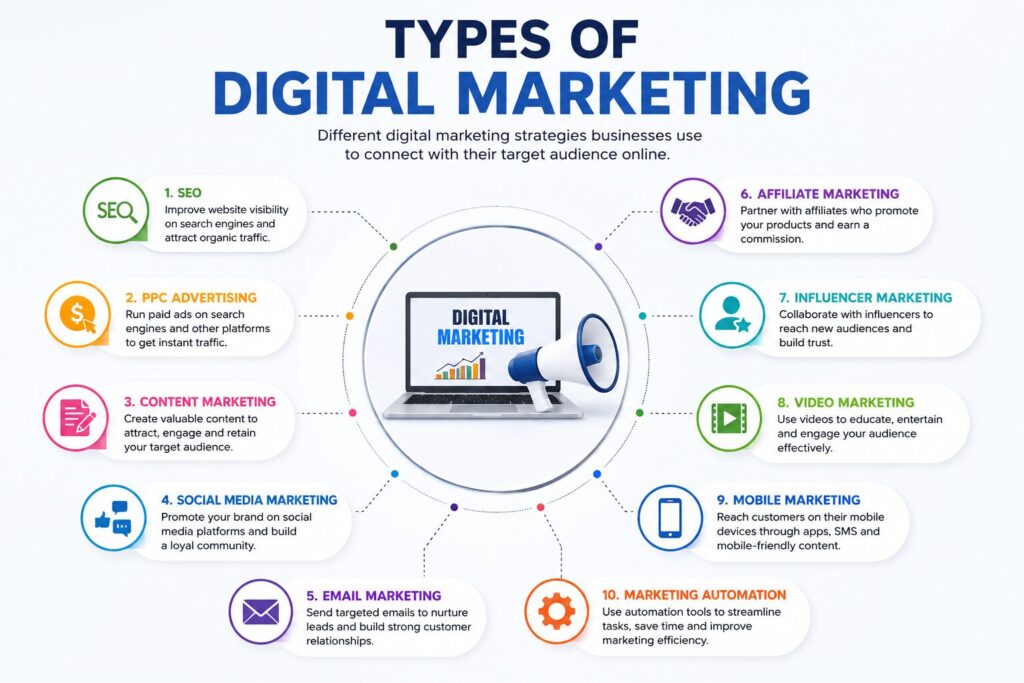
Digital marketing includes various online strategies that businesses use to promote their products and services. Each type has a unique purpose and helps attract, engage, and convert potential customers.
Some businesses focus on one channel, while others combine multiple digital marketing methods to achieve better results and reach a larger audience.
Below are the most common types of digital marketing used by businesses worldwide.
1. Search Engine Optimization (SEO)
SEO is the process of improving a website’s visibility on search engines like Google. The goal is to rank higher for relevant keywords and attract organic traffic without paying for advertisements.
A well-optimized website can generate long-term visitors and increase brand credibility.
2. Pay-Per-Click Advertising (PPC)
PPC is a paid marketing strategy where advertisers pay only when someone clicks on their ad.
Platforms like Google Ads and social media advertising help businesses reach targeted audiences quickly and generate immediate traffic.
3. Content Marketing
Content marketing focuses on creating valuable and informative content to attract and retain customers.
Examples include:
• Blog posts
• Articles
• Guides
• Infographics
• E-books
• Podcasts
High-quality content builds trust and improves SEO performance.
4. Social Media Marketing
Social media marketing involves promoting products and services on platforms like Facebook, Instagram, LinkedIn, X, and YouTube.
Businesses use social media to:
• Build brand awareness.
• Engage with customers.
• Generate leads.
• Drive website traffic.
5. Email Marketing
Email marketing allows businesses to communicate directly with their audience through newsletters and promotional emails.
It helps in:
• Customer retention.
• Lead nurturing.
• Product launches.
• Special offers.
• Building long-term relationships.
6. Affiliate Marketing
Affiliate marketing is a performance-based strategy where affiliates earn commissions by promoting products or services.
Businesses benefit from increased sales while affiliates earn income for successful referrals.
7. Influencer Marketing
Influencer marketing involves partnering with content creators who have loyal audiences.
These collaborations help brands:
• Reach targeted customers.
• Build credibility.
• Increase engagement.
• Boost sales.
8. Video Marketing
Video marketing uses videos to educate, entertain, and promote products or services.
Popular platforms include:
• YouTube
• Instagram Reels
• Facebook Videos
• Short-form content
Videos improve audience engagement and increase conversion rates.
Key Points to Remember :
- SEO
- PPC Advertising
- Content Marketing
- Social Media Marketing
- Email Marketing
- Affiliate Marketing
- Influencer Marketing
- Video Marketing
There is no single best type of digital marketing for every business. The right strategy depends on your goals, target audience, and budget. Most successful businesses combine multiple digital marketing channels to maximize their online presence and achieve sustainable growth.
6. Benefits of Digital Marketing
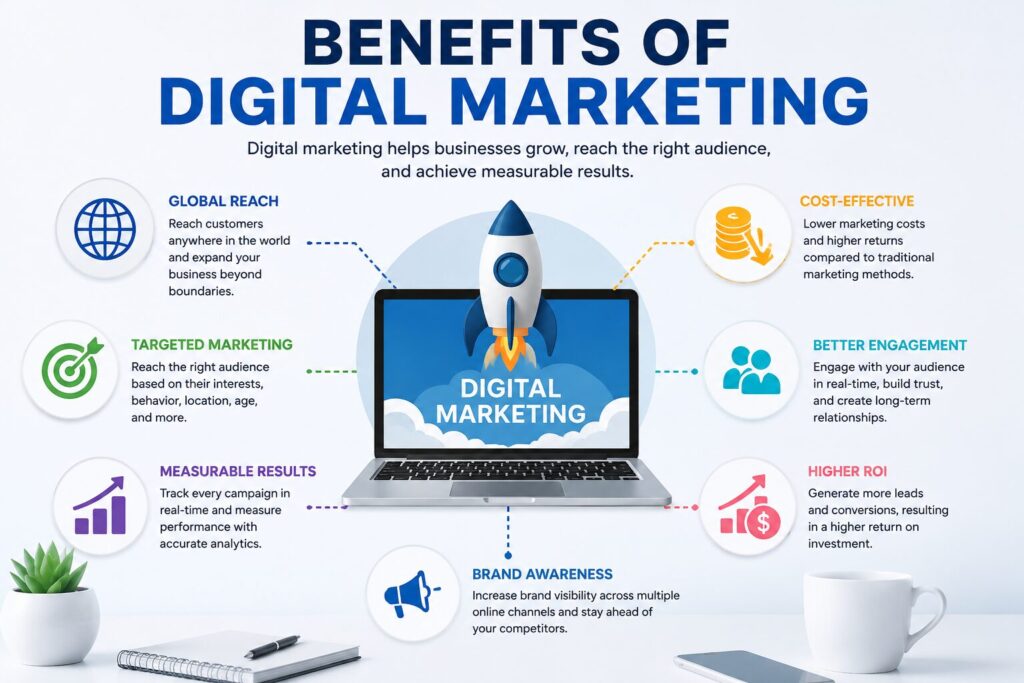
Digital marketing offers businesses a powerful way to connect with customers and grow in today’s online world. Unlike traditional marketing methods, digital marketing provides measurable results, better audience targeting, and cost-effective promotional opportunities.
Whether you run a local business, an online store, or a large company, digital marketing helps increase brand awareness, generate quality leads, and improve customer relationships.
The biggest advantage is that businesses can track performance, optimize campaigns, and achieve better returns on their marketing investments.
Below are some of the biggest benefits of digital marketing for businesses of all sizes.
1. 🌍 Global Reach
One of the biggest benefits of digital marketing is its ability to reach customers across cities, countries, and even continents. Businesses are no longer limited to local markets and can promote their products or services to a global audience through websites, social media, and search engines.
For example, a small business in India can use SEO, social media marketing, and e-commerce platforms to sell products internationally without opening physical stores.
🟩 Example
A local business can reach international customers through SEO, social media, and e-commerce platforms without opening physical stores.
💡 Key Takeaway:
Digital marketing breaks geographical barriers, enabling businesses to reach and grow their customer base worldwide.
2. 🎯 Targeted Marketing
Digital marketing allows businesses to reach the right audience based on factors like age, location, interests, online behavior, and purchasing habits. Unlike traditional advertising, businesses can show their products or services only to people who are most likely to become customers.
This targeted approach reduces wasted advertising costs and improves the chances of generating quality leads and sales.
🟩 Example
A fitness brand can display Instagram ads specifically to people aged 18–35 who are interested in health and exercise.
💡 Key Takeaway
Targeted marketing helps businesses reach the right customers at the right time, improving campaign effectiveness.
3. 📊 Measurable Results
One of the biggest advantages of digital marketing is the ability to measure campaign performance in real time. Businesses can track website traffic, clicks, conversions, engagement, and sales using analytics tools.
This data helps marketers understand what works and make improvements for better results.
🟩 Example
A company running Google Ads can see how many people clicked the ad, visited the website, and made a purchase.
💡 Key Takeaway
Digital marketing provides accurate data that helps businesses make smarter marketing decisions.
4. 💰 Cost-Effective Marketing
Digital marketing is often more affordable than traditional marketing methods such as TV, newspaper, or billboard advertising. Businesses can start with a small budget and gradually increase spending as they achieve positive results.
This makes digital marketing suitable for startups, small businesses, and large enterprises alike.
🟩 Example
A local bakery can promote its products through Facebook ads with a small daily budget instead of paying for expensive newspaper advertisements.
💡 Key Takeaway
Digital marketing delivers better value by reaching more people at a lower cost.
5. 📢 Increased Brand Awareness
Having an online presence through websites, social media, blogs, and search engines helps businesses build brand recognition. The more people see and interact with a brand online, the more familiar and trustworthy it becomes.
Consistent digital marketing efforts help businesses stay connected with existing customers and attract new ones.
🟩 Example
A clothing brand regularly posting on Instagram and YouTube can increase its visibility and attract loyal followers.
💡 Key Takeaway
Digital marketing strengthens brand identity and helps businesses stay visible in a competitive market.
6. 🤝 Better Customer Engagement
Digital marketing allows businesses to communicate directly with their audience through social media, email, live chat, and online communities. Customers can ask questions, share feedback, and interact with brands instantly.
Strong engagement builds trust, improves customer satisfaction, and encourages repeat business.
🟩 Example
A restaurant replying to customer comments and reviews on social media creates stronger relationships with its audience.
💡 Key Takeaway
Regular customer interaction helps businesses build long-term loyalty and trust.
📌 Quick Summary: Benefits of Digital Marketing
- ✅ Global Reach
- ✅ Targeted Marketing
- ✅ Measurable Results
- ✅ Cost-Effective Promotion
- ✅ Increased Brand Awareness
- ✅ Better Customer Engagement
- ✅ Higher Return on Investment (ROI)
Digital marketing helps businesses reach the right audience, reduce costs, build stronger customer relationships, and achieve sustainable business growth through data-driven strategies.
7. 📈 Higher Return on Investment (ROI)
Digital marketing campaigns can generate a higher return on investment because businesses can optimize their strategies based on real-time performance data. By focusing on successful campaigns, companies can maximize profits while controlling marketing costs.
Continuous monitoring and improvement make digital marketing highly effective for business growth.
🟩 Example
An online store can identify its best-performing Facebook ad and invest more budget into that campaign to increase sales.
💡 Key Takeaway
Digital marketing helps businesses achieve better returns by optimizing campaigns and reducing unnecessary spending.
7. Challenges Of Digital Marketing
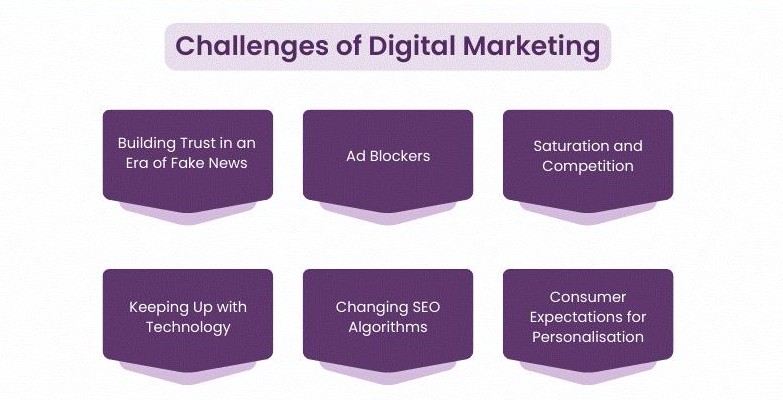
While digital marketing provides numerous benefits, it also comes with several challenges. Businesses must adapt to changing technologies, customer behavior, and increasing online competition to remain successful.
Understanding these challenges helps marketers create better strategies and avoid common mistakes.
Below are some of the biggest challenges of digital marketing.
1. 🏆 High Competition
The online marketplace is highly competitive, with millions of businesses trying to attract the same audience. Standing out requires quality content, effective SEO, and consistent branding.
Companies must continuously improve their marketing efforts to stay ahead of competitors.
🟩 Example
A local clothing store may compete with hundreds of online fashion brands for the same customers.
💡 Key Takeaway
Strong branding and unique value help businesses compete effectively.
2. 🔄 Frequent Algorithm Changes
Search engines and social media platforms regularly update their algorithms. These changes can affect website rankings and social media reach.
Businesses need to stay updated and adjust their strategies accordingly.
🟩 Example
A Google algorithm update may reduce website traffic if SEO practices are outdated.
💡 Key Takeaway
Keeping up with platform updates is essential for long-term success.
3. ⏳ Time-Consuming Content Creation
Creating high-quality blogs, videos, social media posts, and email campaigns requires time and effort. Consistent content production can be challenging for small businesses.
A planned content strategy helps maintain regular engagement.
🟩 Example
A business may need to publish weekly blogs and daily social media posts to stay active online.
💡 Key Takeaway
Consistency is one of the biggest challenges and keys to digital marketing success.
4. 💸 Increasing Advertising Costs
As more businesses invest in digital marketing, advertising costs on platforms like Google and social media continue to rise.
Poorly managed campaigns can quickly exhaust marketing budgets.
🟩 Example
Competitive industries such as insurance or real estate often have expensive online advertising costs.
💡 Key Takeaway
Careful budget planning and campaign optimization are necessary.
5. 📊 Measuring ROI Accurately
Although digital marketing provides data, understanding which campaigns generate the best results can be difficult.
Businesses need proper analytics tools and tracking systems to make informed decisions.
🟩 Example
A company may receive website traffic from multiple sources and struggle to identify which channel generates the most sales.
💡 Key Takeaway
Data analysis is crucial for improving marketing performance.
6. 🔒 Data Privacy and Security
Customers expect businesses to protect their personal information. Privacy regulations and cybersecurity threats require companies to handle customer data responsibly.
Failing to protect data can damage customer trust and brand reputation.
🟩 Example
Businesses collecting email addresses should follow privacy regulations and secure customer information.
💡 Key Takeaway
Building customer trust requires strong data protection practices.
7. 📚 Keeping Up with Trends and Technology
Digital marketing changes rapidly with new platforms, AI tools, and marketing techniques emerging every year.
Businesses that fail to adapt may lose their competitive advantage.
🟩 Example
Companies adopting AI-powered marketing tools can automate tasks and improve customer experiences.
💡 Key Takeaway
Continuous learning helps businesses stay competitive in the digital world.
🔷 Quick Summary Box
📌 Common Challenges of Digital Marketing
- ✅ High Competition
- ✅ Frequent Algorithm Changes
- ✅ Time-Consuming Content Creation
- ✅ Rising Advertising Costs
- ✅ Measuring ROI
- ✅ Data Privacy and Security
- ✅ Keeping Up with New Trends
Digital marketing is highly rewarding, but success requires continuous learning, strategic planning, and adapting to an ever-changing online environment.
🚀 Pro Tip
“Businesses that regularly update their strategies, monitor analytics, and adapt to new digital trends are more likely to overcome marketing challenges and achieve long-term growth.”
8. Future of Digital Marketing
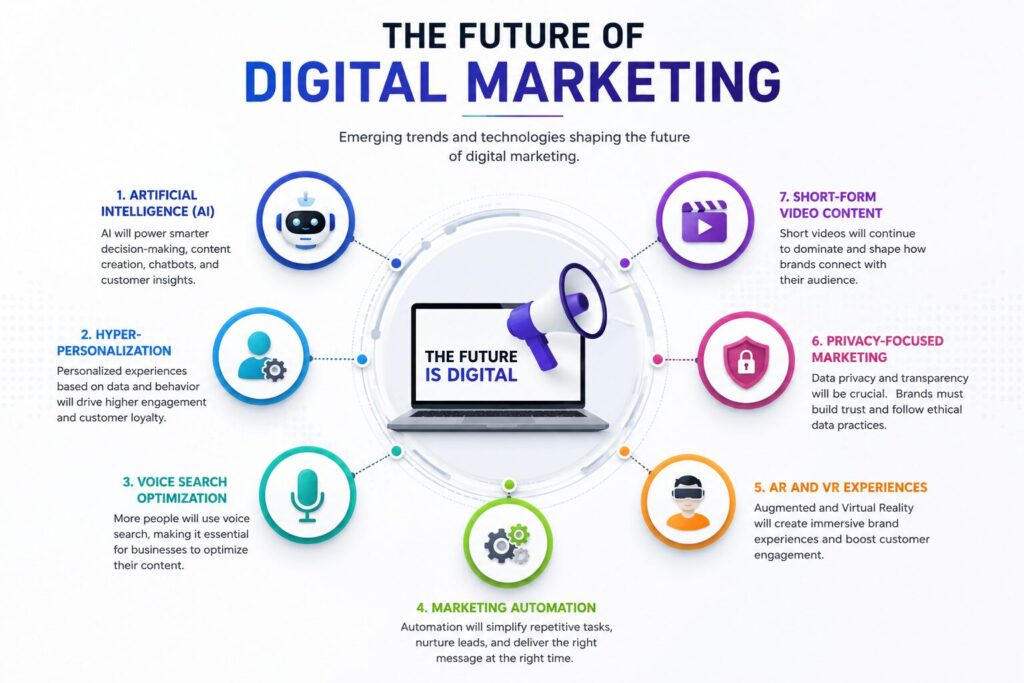
Digital marketing continues to evolve rapidly as technology and consumer behavior change. Businesses that embrace innovation and adapt to new trends will have a competitive advantage in the digital marketplace.
Emerging technologies such as artificial intelligence, automation, voice search, and immersive experiences are transforming how brands connect with their audiences. Understanding these trends can help businesses prepare for the future and achieve sustainable growth.
Below are some of the key trends shaping the future of digital marketing.
1. 🤖 Artificial Intelligence (AI)
Artificial intelligence is revolutionizing digital marketing by helping businesses analyze customer behavior, automate repetitive tasks, and deliver personalized experiences.
AI-powered tools can improve content creation, customer support, and advertising performance.
🟩 Example
AI chatbots can provide instant customer support and answer common questions 24/7.
💡 Key Takeaway
AI helps businesses improve efficiency and deliver better customer experiences.
2. 🎯 Hyper-Personalization
Customers increasingly expect personalized experiences based on their interests and preferences.
Businesses use data and AI to recommend products, create personalized emails, and deliver targeted advertisements.
🟩 Example
Streaming platforms recommend content based on a user’s viewing history.
💡 Key Takeaway
Personalization increases customer satisfaction and engagement.
3. 🎙️ Voice Search Optimization
The popularity of voice assistants is changing how people search online.
Businesses should optimize their content for conversational keywords and natural language queries.
🟩 Example
A user asking a smart speaker, “What is the best digital marketing agency near me?”
💡 Key Takeaway
Voice search optimization improves online visibility for future search behavior.
4. ⚙️ Marketing Automation
Automation tools help businesses manage emails, social media, lead generation, and customer communication more efficiently.
Automation saves time while improving campaign consistency.
🟩 Example
An automated email sequence welcomes new subscribers and introduces products.
💡 Key Takeaway
Automation increases productivity and improves customer engagement.
5. 🥽 Augmented Reality (AR) and Virtual Reality (VR)
AR and VR technologies are creating immersive shopping and brand experiences.
Customers can visualize products before making purchasing decisions.
🟩 Example
A furniture company allowing customers to see how products look inside their homes.
💡 Key Takeaway
Trust and transparency will play a major role in future marketing success.
6. 🔒 Privacy-Focused Marketing
As privacy regulations become stricter, businesses must collect and use customer data responsibly.
Transparency and trust will become essential for successful marketing strategies.
🟩 Example
Businesses requesting clear user consent before collecting personal information.
💡 Key Takeaway
Trust and transparency will play a major role in future marketing success.
7. 📱 Short-Form Video Content
Short videos continue to dominate digital platforms because they are engaging and easy to consume.
Brands use short-form content to educate, entertain, and promote products.
🟩 Example
Businesses creating educational Instagram Reels and YouTube Shorts.
💡 Key Takeaway
Short-form video is becoming one of the most effective marketing formats.
🔷 Quick Summary
📌 Future of Digital Marketing
- ✅ Artificial Intelligence
- ✅ Hyper-Personalization
- ✅ Voice Search
- ✅ Marketing Automation
- ✅ AR and VR
- ✅ Privacy-Focused Marketing
- ✅ Short-Form Video Content
The future of digital marketing will be driven by technology, data, and personalized customer experiences. Businesses that embrace innovation and adapt to changing trends will be better positioned for long-term success.
🚀 Pro Tip
“Successful businesses don’t wait for trends to become mainstream. They test new technologies early, learn from customer data, and continuously adapt their digital marketing strategies.”
9. Frequently Asked Questions
Here are answers to some of the most common questions about digital marketing.
Q1. What is Digital Marketing ?
Digital marketing is the promotion of products, services, or brands through online channels such as search engines, social media, websites, email, and mobile applications.
Q2. Why is digital marketing important?
Digital marketing helps businesses reach a larger audience, generate quality leads, increase brand awareness, and measure marketing performance more effectively.
Q3. What are the main types of digital marketing?
The major types include:
- SEO
- Content Marketing
- Social Media Marketing
- Email Marketing
- PPC Advertising
- Affiliate Marketing
- Influencer Marketing
Q4. Is digital marketing a good career in 2026?
Yes. Digital marketing remains one of the fastest-growing industries, offering opportunities in freelancing, remote work, agencies, and entrepreneurship.
Q5. Can beginners learn digital marketing?
Absolutely. Beginners can start with SEO, content marketing, social media, and Google Ads while gaining practical experience through projects.
Q6. How long does it take to learn digital marketing?
Basic concepts can be learned within a few months, while mastering advanced strategies requires continuous practice and real-world experience.
10. Final Thoughts
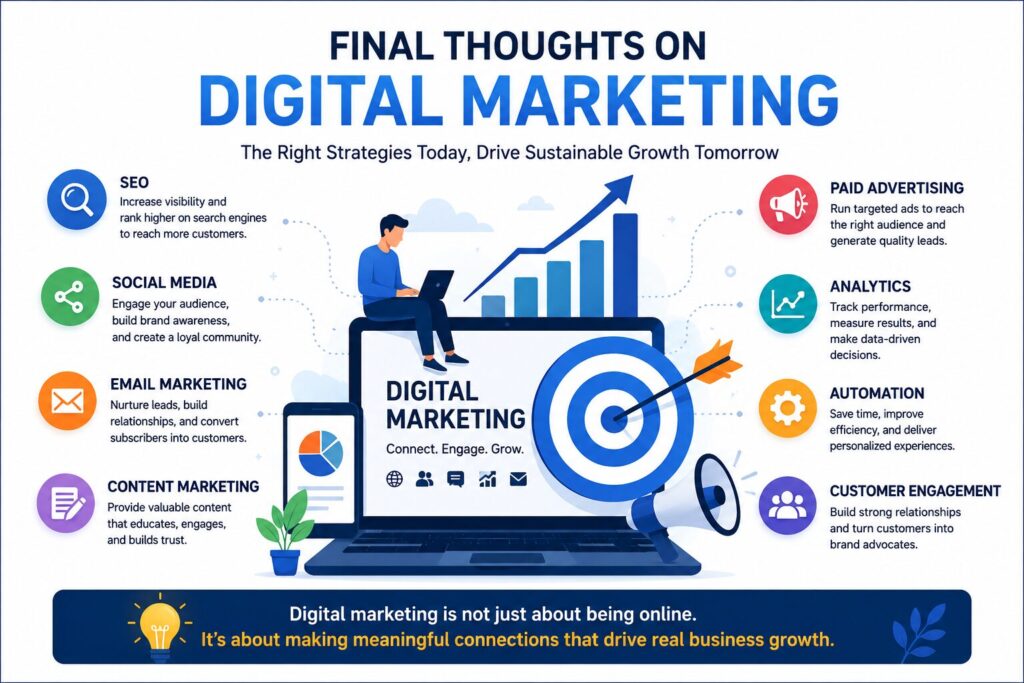
Digital marketing has transformed the way businesses connect with customers, promote products, and build long-term relationships. From search engines and social media to email campaigns and artificial intelligence, digital channels provide countless opportunities for business growth.
Whether you are a small local business, an entrepreneur, or a large organization, digital marketing offers cost-effective solutions to reach the right audience and achieve measurable results.
🚀 Why Digital Marketing Matters
Businesses that invest in digital marketing can:
✅ Increase brand awareness.
✅ Generate quality leads.
✅ Improve customer engagement.
✅ Build long-term customer relationships.
✅ Measure campaign performance.
✅ Achieve sustainable business growth.
In today’s competitive market, having a strong online presence is essential for staying ahead of competitors.
🌟 The Key to Success
Success in digital marketing does not happen overnight. It requires:
✔ Consistent effort.
✔ High-quality content.
✔ Understanding customer needs.
✔ Data-driven decision making.
✔ Adapting to changing technologies and trends.
Businesses that continuously learn and improve their strategies are more likely to achieve long-term success.
🟩 Real-World Example
A local business can start with a simple website, social media pages, and SEO. As it grows, it can expand into paid advertising, email marketing, automation, and AI-powered customer engagement to reach more customers and increase revenue.
💡 Key Takeaway
Digital marketing is not about using a single strategy. The best results come from combining multiple channels and continuously optimizing campaigns based on performance and customer behavior.
🔷 Quick Summary Box
📌 What We Learned
- ✅ What Digital Marketing Is
- ✅ Why It Is Important
- ✅ How It Works
- ✅ Types of Digital Marketing
- ✅ Benefits of Digital Marketing
- ✅ Challenges of Digital Marketing
- ✅ Future Trends
- ✅ Frequently Asked Questions
Digital marketing helps businesses connect with the right audience, build strong customer relationships, and achieve long-term growth through innovative and data-driven strategies. Businesses that embrace digital transformation today will be better prepared for the opportunities of tomorrow.
🚀 Pro Tip
Start with a clear goal, focus on your audience, create valuable content, track your results, and continuously improve your strategy. Small, consistent efforts in digital marketing can lead to significant long-term business growth.
🚀 Ready to Grow Your Business Online?
Digital marketing is no longer optional—it’s essential for businesses that want to grow, reach more customers, and stay competitive.
Whether you’re a small business owner, freelancer, or entrepreneur, learning digital marketing can help you:
- ✅ Increase website traffic
- ✅ Generate quality leads
- ✅ Build a strong online brand
- ✅ Boost sales and revenue
Start with one strategy, stay consistent, and keep learning as digital trends evolve.
📚 Continue Your Digital Marketing Journey
Explore these beginner-friendly guides to expand your digital marketing knowledge.
📖 Related Articles
➡️ SEO for Beginners: How to Rank Higher on Google
➡️ Social Media Marketing: A Complete Guide
➡️ Content Marketing Strategy for Business Growth
➡️ Google Ads Explained for Beginners
➡️ Email Marketing Best Practices
👨💻 About the Author
👨💻 About Yashvi Digital
Yashvi Digital is dedicated to helping businesses, entrepreneurs, and beginners succeed in the digital world.
We share practical insights, proven strategies, and easy-to-understand guides on:
- ✅ Digital Marketing
- ✅ Search Engine Optimization (SEO)
- ✅ Social Media Marketing
- ✅ Content Marketing
- ✅ Google Ads & PPC
- ✅ Website Growth Strategies
Our mission is to simplify digital marketing and provide actionable knowledge that helps businesses grow their online presence and achieve long-term success.
Stay connected with Yashvi Digital for the latest trends, tips, and practical digital marketing solutions.
💡 Yashvi Digital believes that successful digital marketing is built on consistency, creativity, and data-driven decision-making.
📚 Continue Learning
➡️ Explore more beginner-friendly digital marketing guides on Yashvi Digital.